Pad See Ew: Wide Noodles, Char, Greens, and Protein
On this page
Quick answer
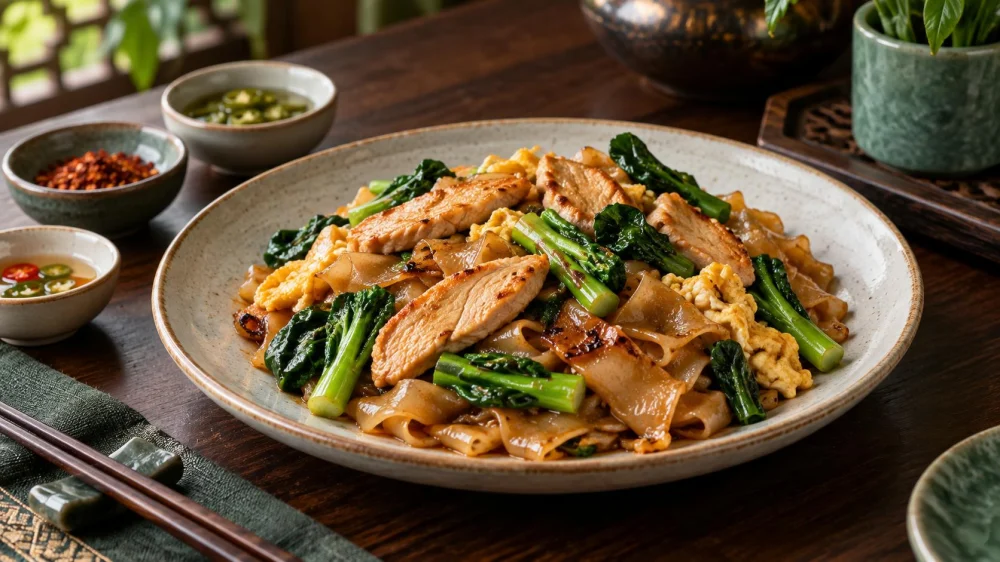
Pad see ew is a Thai stir-fried noodle dish typically built around wide rice noodles, dark and light soy-style seasonings, egg, Chinese broccoli or another green, and a chosen protein. Ask whether the kitchen can adjust sweetness, add vegetables, or omit egg, but confirm allergens separately: soy, wheat, egg, shellfish, fish, and shared wok contact may still apply.
Know the dish
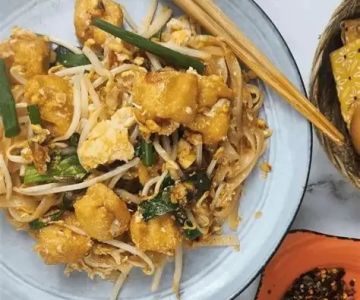
The name is commonly translated as soy-sauce stir-fry. It is usually milder and less tangy than pad Thai, with savory-sweet seasoning and the aroma of a hot wok. Restaurant versions vary in noodle width, sauce balance, greens, and protein.
Tourism Authority of Thailand material on local Thai food and restaurant types includes pad see ew among made-to-order, single-dish foods, reflecting its place as an everyday customizable meal rather than one fixed presentation.
Phở O Sha | Thai-Vietnamese Restaurant
WatertownMiddlesex CountyMassachusetts
356 Arsenal St, Watertown, MA 02472, USA
Judge the noodles and char
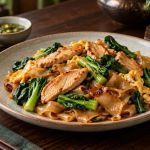
Fresh wide rice noodles should be tender and flexible, with enough separation to pick up sauce and browned edges. High heat can create toasted aroma and small caramelized patches, but the dish should not taste bitter or uniformly burnt.
Eat it soon after service. Wide noodles can continue absorbing sauce and may clump as they cool. Lift and separate gently rather than cutting everything into short pieces.
Notice greens and egg
Chinese broccoli contributes firm stems, leafy texture, and mild bitterness that balances the sauce. Some restaurants use broccoli, kale, bok choy, or mixed vegetables instead. Egg is often scrambled through the noodles, adding soft richness.
Ask which green is used and whether stems can be cut smaller if texture matters. Omitting egg changes both flavor and structure, so confirm what the kitchen can reasonably do.
Choose protein and portion
Chicken, pork, beef, shrimp, tofu, or vegetables are common choices. The protein should be cooked through and distributed across the noodles. A large plate can be a complete meal; for sharing, add small plates before the noodles cool.
Pair with a crisp salad, clear soup, or vegetables when the noodle dish is especially rich. Taste before adding chili, vinegar, fish sauce, or sugar because the kitchen has already balanced the sauce.
Ask about allergens and substitutions
Rice noodles do not make the whole dish gluten-free. Soy sauces can contain wheat, and the wok, utensils, seasoning bottles, or cooking oil may be shared. Fish sauce, oyster sauce, shrimp, egg, soy, and other allergens may appear even when not obvious.
For an allergy, name the allergen, ask about every sauce and shared surface, and choose another dish if the restaurant cannot confirm a safe process. Preference-based omissions and medical allergy controls are not the same.
Important limits
This guide describes common restaurant patterns, not a universal recipe. Ingredient, heat, portion, and dietary claims depend on the specific kitchen. Follow staff information and personal medical advice.
Frequently asked questions
Is pad see ew spicy?
It is often mild, but recipes and condiments vary. Ask about chili in the sauce and at the table.
Is it the same as drunken noodles?
No. Drunken noodles usually feature different seasoning, herbs, and more heat, although both may use wide rice noodles.
Can pad see ew be vegetarian?
Sometimes. Confirm the sauces, egg, stock, and shared preparation rather than judging only by the visible protein.
Why do the noodles stick together?
Fresh rice noodles are delicate and can clump from storage, sauce, or cooling. Gentle separation and prompt serving help.
Sources and culture notes
This guide uses Tourism Authority of Thailand context for made-to-order Thai food and describes common U.S. restaurant versions. Individual kitchens and regional cooks may prepare the dish differently.
Next steps
Choose the protein, ask which greens and sauces are used, and state any allergy clearly. Taste the noodles while hot, look for tender texture and balanced char, and add condiments gradually.

 Thai Noodle Cafe4.0 (199 reviews)
 Phở O Sha | Thai-Vietnamese Restaurant4.0 (377 reviews)
 Pho And Thai4.0 (220 reviews)
 Muang Thai Restaurant4.0 (82 reviews)
 Thai Ocha Cafe4.0 (318 reviews)
 Bangkok Thai Cuisine II4.0 (161 reviews)
 Thai Iced Tea: Sweetness, Dairy, Ice, and Caffeine
 Pad See Ew: Wide Noodles, Char, Greens, and Protein
 Thai Restaurant Menu Specials: Ask What Changes Before Ordering
 Thai Restaurant Meal Timing: Coordinate Courses Without Rushing
 Thai Larb Guide: Herbs, Toasted Rice, Heat, and Pairing
 Thai Papaya Salad: Crunch, Heat, Dressing, and Allergens