Thai Curry Colors Explained: Flavor, Heat, and Ordering
On this page
Quick answer
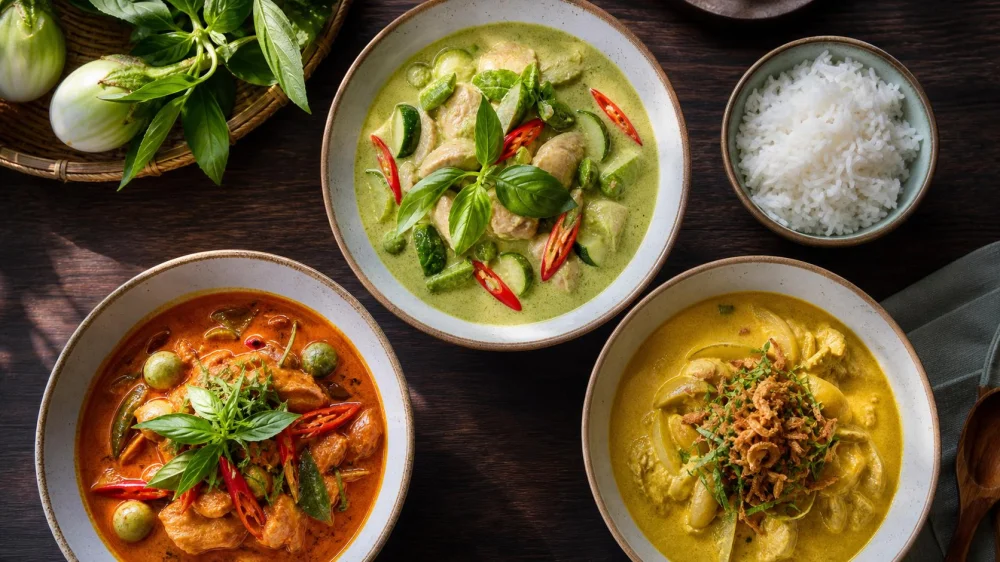
Thai curry color usually reflects the ingredients in its paste, not a universal heat ranking. Green curry often tastes bright and herbal, red curry is chile-forward and aromatic, and yellow curry commonly emphasizes warm dried spices. Any can be mild or hot depending on the paste, cook, and restaurant. Ask about the kitchen's actual heat level, protein, vegetables, sweetness, and allergens before ordering.
Thai curry paste is a pounded or blended aromatic base that may combine chiles, lemongrass, galangal, makrut lime, garlic, shallot, roots, spices, and fermented seasonings.
What curry color actually means
The color gives clues about the paste, but it does not fully predict taste. Fresh green chiles and herbs can color a green curry; dried red chiles contribute to red paste; turmeric and dried spices often create golden tones. Coconut milk, stock, regional style, and the main ingredient change the finished dish.
U.S. restaurant labels are helpful shorthand, not rigid recipes. Two kitchens can serve noticeably different versions under the same English name.
Green curry
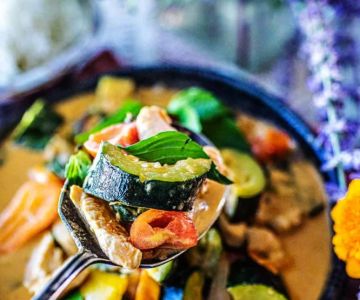
Green curry is often aromatic, fresh, and rich, with green chiles and herbs against coconut milk. Basil, eggplant, bamboo shoots, or other vegetables may appear depending on the restaurant.
Best for: diners who want a fragrant, herbal coconut curry. Not ideal for: anyone assuming its green color guarantees mildness; some versions are assertively hot.
Red curry
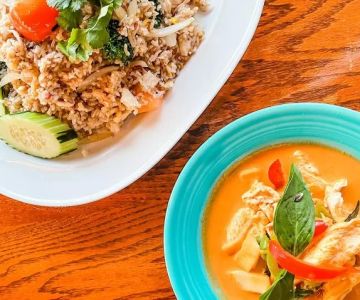
Red curry paste commonly uses dried red chiles with lemongrass, galangal, garlic, shallot, and other aromatics. The sauce may taste savory, gently sweet, and chile-forward, but heat varies.
Best for: a versatile first comparison with chicken, tofu, beef, duck, or vegetables. Ask how the restaurant balances sweetness and spice.
Yellow curry
Yellow curry often highlights turmeric and warm spices such as cumin or coriander. Potatoes and onions are common in many restaurant versions, creating a comforting texture and familiar spice profile.
When to choose: when you prefer warm dried-spice notes. Do not assume it is automatically mild; confirm the kitchen's preparation.
Other curry styles
Panang: frequently thicker, rich, and aromatic, sometimes with a pronounced makrut lime note and less free sauce than a standard red curry.
Massaman: often combines warm spices, coconut milk, potatoes, onions, and peanuts or peanut-related ingredients. It can have a gently sweet-savory profile.
Jungle curry: commonly omits coconut milk and can be brothy, herbal, and quite hot. It is not the choice for someone seeking coconut richness.
Regional and house specialties may not fit these summaries. Read the ingredient description and ask questions.
How to order confidently
- Choose the flavor direction: herbal, chile-forward, warm-spiced, rich, or brothy.
- Ask how that specific curry rates on the restaurant's own heat scale.
- Select a protein or vegetables that fit the sauce and check whether rice is included.
- Ask about sweetness if you prefer a more savory curry.
- State allergies clearly and ask staff to verify paste, sauce, garnish, and cross-contact.
- Order another contrasting dish—such as a vegetable side or crisp salad—for texture balance.
Limitations and allergy notes
Curry pastes and sauces may contain shrimp paste, fish sauce, peanuts, soy, coconut, or other allergens that are not visible. “Vegetable” or “tofu” does not necessarily mean vegetarian or vegan. Ingredient substitutions do not guarantee protection from shared equipment or cross-contact.
Heat labels such as mild, medium, and hot are restaurant-specific. If spice is a health concern, explain the need rather than relying only on a number.
Frequently asked questions
Is green curry hotter than red curry?
Not reliably. Chile type, quantity, paste concentration, and kitchen style determine heat. Ask the restaurant about its versions.
Which Thai curry is usually sweetest?
Recipes vary, but many U.S. menus serve Massaman or Panang with noticeable sweetness. Ask whether sweetness can be adjusted.
Does every Thai curry contain coconut milk?
No. Jungle curry is a well-known example that commonly uses a brothy base without coconut milk, and regional curries vary widely.
Can Thai curry be vegan?
It can be, but the paste or sauce may contain shrimp paste, fish sauce, or other animal ingredients. Request verification rather than assuming.
Sources and evidence notes
This guide summarizes widely recognized Thai culinary patterns rather than prescribing one definitive recipe. Curry names, ingredients, heat, and sweetness differ by region, household, chef, and restaurant adaptation.
Next steps
Use curry color as a flavor clue, then confirm heat and ingredients with the restaurant. Choose the aromatic profile you want, communicate dietary needs clearly, and compare two styles over time to learn your preferences.

 Suwun Thai Home Cooking4.0 (231 reviews)
 Siam Orchid Thai Bistro4.0 (707 reviews)
 Malai Thai Cuisine4.0 (362 reviews)
 House of Thai4.0 (682 reviews)
 Sawadee Thai Fusion4.0 (204 reviews)
 Thai Amarin4.0 (422 reviews)
 The Best Thai Food Mobile Apps for Discovery & Delivery in the U.S.
 The Best Thai Food Recipes for Couples Cooking Together
 How to Make the Most of Thai Food and Mindful Eating
 Best Thai Meat Recipes for Meat Lovers Seeking Something New
 Mastering Thai Fish Sauce: Uses and Tips for Flavorful Cooking
 The Best Thai Food Recipes for Hosting a Dinner Party