
Pad Kra Pao Guide: Holy Basil, Heat, Rice, and Fried Egg
On this page
Quick answer
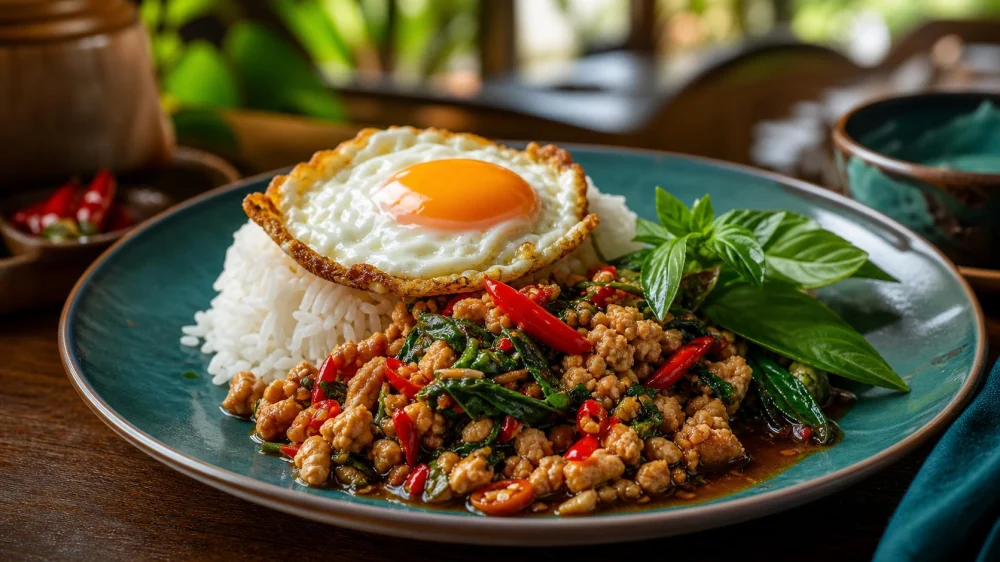
Pad kra pao is a fast Thai stir-fry built around garlic, chiles, savory seasoning, and fragrant holy basil, usually served with jasmine rice. Chicken, pork, beef, seafood, tofu, or another base may be chopped, ground, sliced, or crisped. A fried egg with lacy edges and a soft or set yolk is a popular addition.
Ask whether the kitchen uses holy basil or another basil, how much chile is cooked into the dish, and whether sauces contain fish, shellfish, soy, wheat, or other allergens. A tofu version may still include fish sauce or oyster sauce unless the restaurant makes a verified vegetarian or vegan adjustment.
Recognize the menu name
You may see pad kra pao, pad krapao, pad kaprao, phat kaphrao, or “Thai basil stir-fry.” The spelling reflects different ways of writing Thai sounds in English. The menu may add the protein name, such as gai for chicken or moo for pork.
Thai SELECT describes pad ka prao kai as stir-fried chicken with holy basil. Restaurant shorthand can be broader, so read the ingredient description instead of judging authenticity from one English spelling.
Understand the holy basil flavor
Thai holy basil has a peppery, clove-like aroma that differs from sweet Italian basil and Thai sweet basil. High heat wilts the leaves and releases fragrance into the sauce. Availability varies, and restaurants abroad may substitute or blend basils.
If holy basil matters to you, ask which herb is in the current batch. A substitution can still produce a delicious stir-fry, but it will taste different. Visible basil leaves should be integrated through the dish rather than used only as a raw decorative sprig.
Choose the protein or plant-based base
Ground or finely chopped chicken and pork readily absorb sauce and create crisp edges. Sliced beef offers a different chew, while shrimp or squid cooks quickly. Tofu, mushrooms, plant-based mince, or mixed vegetables can carry the basil and chile profile when the kitchen supports them.
Ask whether the protein is marinated, whether ground meat is cooked to order, and whether plant-based items share a wok, fryer, utensils, or sauce with meat and seafood. “No meat” does not answer questions about fish sauce, oyster sauce, broth, egg, or cross-contact.
Ask what builds the sauce
The glossy seasoning may combine fish sauce, oyster sauce, soy sauces, sugar, stock, and cooking juices. Garlic and chile are fried to release aroma before the main ingredient and basil join. Some versions are relatively dry and concentrated; others leave more sauce for the rice.
Do not assume a brown sauce contains the same ingredients at every restaurant. If sodium, shellfish, fish, wheat, soy, or vegetarian preparation matters, ask the kitchen to check the actual sauces and labels. Requesting “no fish sauce” may still leave oyster sauce or stock.
Set the chile level realistically
Pad kra pao often gets heat from fresh bird’s eye chiles or other chiles cooked with garlic. Removing visible slices after cooking will not remove the heat already infused into the oil and sauce. “Thai hot,” “medium,” and numeric scales are not standardized.
Ask whether the kitchen can reduce chiles during cooking and whether a mild base is possible. Extra chile or prik nam pla can come separately for diners who want more. A zero-chile request may change the dish’s character, but it is better to ask honestly than order a heat level you cannot enjoy.
Decide on the fried egg
A Thai-style fried egg, khai dao, can have a crisp, bubbled white and rich yolk that spreads into the stir-fry and rice. Some kitchens fry it more gently. Ask whether the yolk is runny, medium, or fully set and whether the kitchen can meet your preference.
The egg is optional and adds an egg allergen plus possible shared-oil cross-contact. People advised to avoid undercooked egg should request a fully cooked yolk and white or skip it. Confirm whether the price includes the egg or treats it as an add-on.
Use the rice to balance each bite
Jasmine rice absorbs the salty, spicy sauce and spreads the basil flavor. Mix a small amount of stir-fry into each spoonful rather than eating all the seasoned protein first. Break the egg yolk over only part of the rice if you want to compare the plate with and without it.
Ask about the serving size and whether extra rice is available before ordering for a group. Brown rice, sticky rice, or cauliflower rice may be offered, but each changes texture and is not necessarily traditional for this plate.
Check allergens and dietary claims
Potential allergens include fish and shellfish in sauces, soy, wheat, egg, and ingredients in plant-based meat. Peanuts are not essential to pad kra pao but may be present elsewhere in the kitchen or in a house variation. Wok seasoning and shared utensils can create cross-contact.
Tell the server the specific allergy before ordering. Ask the kitchen to verify every bottled sauce, stock, marinade, garnish, and cooking surface. If it cannot confirm a safe process for a severe allergy, choose a dish with a clearer preparation rather than relying on ingredient removal at the table.
Order and enjoy the plate
A clear order includes the base, heat level, rice, egg preference, and any verified dietary request: for example, chicken pad kra pao at the restaurant’s medium heat with a fully cooked fried egg. Repeat the request when the plate arrives if an allergy marker or expected adjustment is missing.
Eat the stir-fry while hot and the basil is aromatic. Taste before adding table condiments because the sauce may already be salty and spicy. For leftovers, refrigerate promptly under local food-safety guidance and reheat meat, rice, and egg thoroughly rather than leaving the plate at room temperature.

 Rice Pot Thai Restaurant4.0 (441 reviews)
 Thai Elephant 24.0 (447 reviews)
 My Thai4.0 (109 reviews)
 Ricky’s Thai Bernardsville4.0 (75 reviews)
 Sawatdee Restaurant4.0 (369 reviews)
 Seth Thai Restaurant4.0 (92 reviews)
 Thai Food Ingredient Spotlight: Palm Sugar – How to Substitute & Use
 How to Make Thai Food That’s Great for Lunchboxes & On-the-Go
 The Best Thai Food Restaurants in Kansas City for Hidden Gems
 Thai Grilled Chicken and Skewers: A Restaurant Ordering Guide
 : How to Make the Most of Thai Food in the Microwave
 How to Make Southern Thai Seafood Dishes at Home