
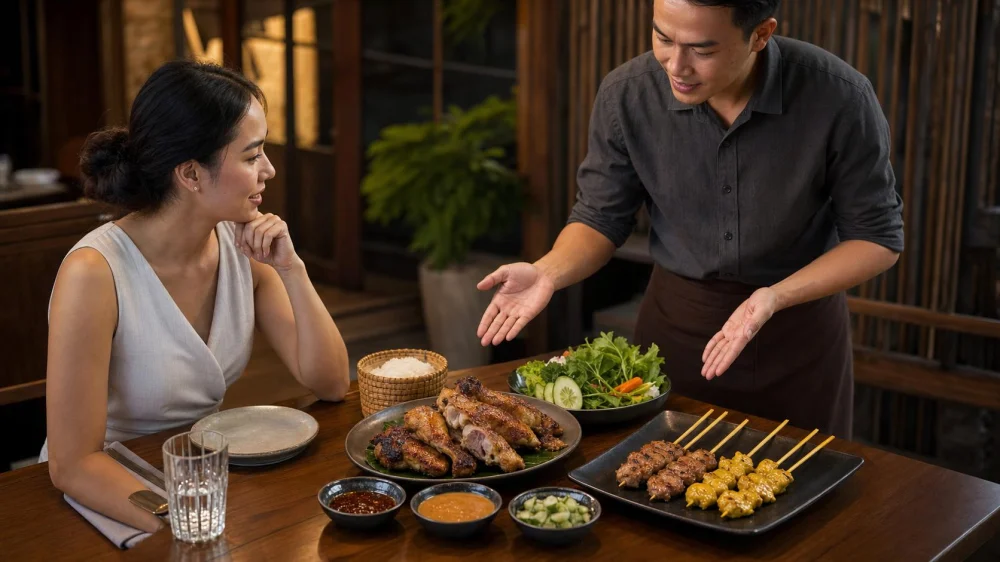
Thai Grilled Chicken and Skewers: A Restaurant Ordering Guide
On this page
- Quick answer
- Gai yang: Thai grilled chicken
- Moo ping: grilled pork skewers
- Satay and peanut sauce
- Other grilled dishes
- Read marinades and char
- Choose dipping sauces
- Understand spice level
- Ask allergen and dietary questions
- Build a balanced meal
- Order and share considerately
- Takeout and leftovers
- Ordering checklist
- Frequently asked questions
- Next steps
Quick answer
Choose gai yang for herb-marinated Thai grilled chicken, moo ping for sweet-savory pork skewers, and satay for smaller marinated skewers commonly served with peanut sauce and cucumber relish. Restaurants may also grill beef, seafood, sausage, tofu, mushrooms, or vegetables.
Ask about cut, bone, skewer count, portion size, marinade, chile, fish sauce, soy, oyster sauce, coconut milk, peanut, and dipping sauces. Grilled does not mean plain or allergen-free. Pair the meat with sticky rice or jasmine rice, a crisp salad, vegetables, and one contrasting soup or dip. Let the server handle very hot plates and remove meat from pointed skewers carefully.
Gai yang: Thai grilled chicken
Gai yang is associated especially with northeastern Thai and Lao culinary traditions, though it is enjoyed widely. Chicken is marinated with combinations of garlic, coriander root or stems, pepper, fish sauce, soy, sugar, turmeric, lemongrass, or other seasonings, then grilled.
The restaurant may serve a quarter, half, whole bird, boneless pieces, wings, thighs, or a plated portion. Bone-in chicken can remain juicy and develop charred skin, but it requires more careful sharing.
Ask whether the portion includes breast, leg, mixed pieces, or chef’s selection. Confirm how many people it is intended to serve.
Gai yang often comes with a chile dipping sauce such as jaew and pairs naturally with sticky rice and som tam. Sauce names and recipes vary.

Moo ping: grilled pork skewers
Moo ping consists of marinated pork grilled on skewers. The meat can be sliced thinly and may include some fat for moisture and flavor.
Marinades often balance savory seasoning, garlic, pepper, sugar, and sometimes coconut milk. The exterior can become caramelized and lightly smoky.
Orders may be priced per skewer or by a set. Ask how many pieces and whether sticky rice is included.
Moo ping can be sweet but is not necessarily mild; sauce or marinade may contain chile. It works as a snack, appetizer, or part of a shared meal.
Satay and peanut sauce
Thai satay commonly features smaller skewers of marinated chicken or pork with turmeric and aromatic seasoning. It is often served with peanut sauce and a cucumber-onion relish.
Peanut sauce can contain peanuts, coconut, chile, soy, wheat, fish sauce, or other ingredients. The relish may include vinegar, sugar, chile, and shallot or onion.
Satay is not identical to moo ping. The skewer size, marinade, sauce, and cultural route differ even when both use pork or chicken.
Ask whether sauce comes on the side and whether additional sauce costs extra. For peanut allergy, do not rely on ordering skewers without the sauce because preparation and grill cross-contact may remain.
Other grilled dishes
Crying tiger or suea rong hai typically refers to grilled beef served with a dipping sauce, though cut and presentation vary. Ask the restaurant about doneness and slicing.
Sai krok Isan is a fermented northeastern sausage commonly served with ginger, cabbage, chile, or peanuts. Sourness and texture differ from smooth sweet sausage.
Grilled fish may arrive whole, stuffed with herbs, salt-crusted, or filleted. Confirm bones, serving size, and sauce.
Seafood, tofu, mushrooms, corn, eggplant, and other vegetables can be grilled, but marinades and shared surfaces can contain animal products or allergens.
Read marinades and char
Thai grilling builds flavor before and during cooking. Marinade can include fish sauce, soy sauce, oyster sauce, palm sugar, coconut milk, garlic, pepper, coriander, turmeric, lemongrass, and other aromatics.
Sweet marinades caramelize quickly, creating dark edges. Dark color does not automatically mean the food is burned, but bitter blackened areas can be left uneaten.
Ask whether the kitchen can reduce a sauce or ingredient, but understand that meat may be marinated in batches and cannot be changed to order.
“Plain grilled” may still use seasoning for moisture and browning. Confirm ingredients rather than judging by appearance.
Choose dipping sauces
Nam jim jaew is often tangy, salty, spicy, and aromatic, with chile and toasted rice powder in many versions. It pairs with grilled chicken, pork, and beef.
Sweet chile sauce brings sweetness and moderate heat. Peanut sauce adds richness. Seafood sauce may be sharp with lime, garlic, fish sauce, and green chile.
Order sauces on the side for tasting control. Try the meat first, then dip lightly so marinade and smoke remain noticeable.
Do not pour a shared sauce over the entire platter unless everyone agrees. Use individual dipping dishes when available.
Understand spice level
The grilled meat may be mild while the sauce is hot. Ask separately about marinade, dry seasoning, garnish, and dipping sauce.
Visible whole chiles beside gai yang or sausage may be intended as optional bites. They can be much hotter than the meat.
Order plain rice and water. Coconut-rich or sweet sauces may change heat perception but do not remove capsaicin.
If the marinade is fixed, request a mild sauce or no added chile garnish rather than asking the kitchen to wash seasoning from the meat.
Ask allergen and dietary questions
Common concerns include peanut, tree nuts, soy, wheat, fish, shellfish, coconut, sesame, dairy, and egg. Marinades and prepared sauces can contain several.
Shared grills, brushes, tongs, fryers, cutting boards, and sauce containers create cross-contact. Tell staff about an allergy before ordering.
A vegetable or tofu skewer may use fish sauce, oyster sauce, meat seasoning, or a shared grill. Ask whether the entire preparation is vegetarian or vegan.
Gluten-free needs require checking soy sauce, seasoning sauce, oyster sauce, marinades, sausage, and cross-contact. Meat itself does not make the dish gluten-free.
Build a balanced meal
Pair gai yang or moo ping with sticky rice for a northeastern-style combination, then add som tam, larb, grilled vegetables, or a clear soup.
For a gentler table, combine grilled chicken, jasmine rice, sautéed greens, and tom kha. For more contrast, add a sour salad and fresh herbs.
Avoid duplicating sweetness with several coconut marinades and sweet sauces. Include something sour, fresh, or bitter.
Ask about portions. A half chicken plus several skewers may be more food than the table expects.
Order and share considerately
Use serving utensils for shared platters. Transfer one piece to your plate before eating with your hands or utensils.
Pointed skewers can injure. Hold the cool end, slide food onto your plate with a fork when practical, and place empty skewers in a designated dish.
Bone-in chicken is often easiest to divide before saucing. Ask the restaurant to cut it into pieces if that is the house practice.
Hot metal plates, clay stoves, and grills should remain where staff place them. Keep children and sleeves away.
Takeout and leftovers
Package sauce, relish, herbs, and raw vegetables separately from hot meat so textures remain distinct. Secure pointed skewers inside the container.
Transport promptly and refrigerate leftovers according to food-safety guidance. Do not leave grilled meat in a warm vehicle.
Reheat gently to a safe temperature without drying thin skewers. Follow restaurant guidance and discard food held unsafely.
Remove wooden skewers before microwaving. Transfer food to microwave-safe cookware rather than heating unknown takeout packaging.
Ordering checklist
- Choose gai yang, moo ping, satay, beef, sausage, fish, or vegetables.
- Confirm bone-in or boneless cut and portion size.
- Ask how many skewers and whether rice is included.
- Check marinade, chile, and dipping sauce separately.
- Share peanut, fish, shellfish, soy, wheat, coconut, and sesame concerns.
- Pair grilled food with rice, vegetables, salad, or soup.
- Use serving utensils and handle pointed skewers carefully.
- Keep takeout sauces separate and refrigerate promptly.
Frequently asked questions
What is the difference between moo ping and satay?
Moo ping is a Thai grilled pork skewer with its own sweet-savory marinade. Satay uses a different seasoning tradition and is commonly served with peanut sauce and cucumber relish.
Is gai yang spicy?
The chicken marinade may be aromatic rather than very hot, while the dipping sauce can be spicy. Ask about both.
Does grilled Thai food contain gluten?
It can. Soy sauce, seasoning sauce, oyster sauce, sausage, marinade, and cross-contact may contain wheat.
Can Thai grilled skewers be made vegetarian?
Some restaurants offer tofu, mushroom, or vegetable skewers, but confirm fish sauce, oyster sauce, stock, and shared grill practices.
Should I eat gai yang with my hands?
It may be eaten with hands in some contexts, but use the restaurant’s utensils and shared-food etiquette. Transfer your portion to your plate first.
Next steps
Choose a grilled protein or vegetable, confirm portion and marinade, then select sauces based on heat and allergens. Add rice and a fresh or sour dish for balance. Taste before dipping heavily and handle bones, hot plates, and skewers carefully.
Recipes, names, and serving styles vary across Thailand and among restaurants. Ask how the kitchen prepares its version.

 The Chatta Box4.0 (795 reviews)
 Sukhothai4.0 (424 reviews)
 THAI KITCHEN - Thai Restaurant4.0 (334 reviews)
 Blue Mango4.0 (294 reviews)
 Twin Tails4.0 (193 reviews)
 Roi Siam Restaurant4.0 (235 reviews)
 Thai Food Near Me in Tacoma: Curry Spots in the City of Destiny
 Thai Food for Busy Weeknights: Pre-Prep & Cook Smart for Quick and Flavorful Dinners
 Thai Food for Apartment Living: Easy Flavorful Budget Meals
 Thai Food Ingredient Guide: Thai Chili Flakes — How Hot Are They Really?
 The Best Thai Food Recipes for Holiday Entertaining & Leftovers
 Thai Food Ingredient Spotlight: Thai Coconut Cream — How to Choose & Use | Perfect for Thai Recipes