How to Read a Thai Restaurant Menu with Confidence
On this page
Quick answer
Read a Thai menu by identifying the dish format first—curry, soup, salad, noodle, fried rice, or stir-fry—then check the stated protein, herbs, sauce, and heat. For a shared meal, combine contrasting textures and flavors rather than ordering several similar rich dishes. Ask the restaurant about unfamiliar ingredients, spice levels, allergens, portion style, and substitutions before ordering.
A Thai restaurant menu often groups dishes by cooking method or format, while the final flavor depends on the restaurant's regional focus, recipe, and available ingredients.
How Thai menus are organized
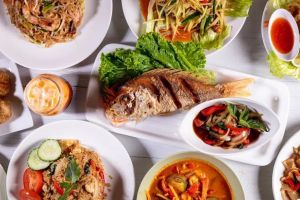
Many U.S. Thai restaurants separate appetizers, soups, salads, curries, noodles, fried rice, and entrées. Some let you select a protein for a base preparation; others present complete dishes with a traditional main ingredient. Regional or specialty restaurants may organize the menu differently.
Do not rely on an English name alone. Read the description for coconut milk, fermented sauces, peanuts, egg, seafood, herbs, and vegetables. A familiar dish name can vary meaningfully between kitchens, so the restaurant's own description and staff are the best sources for that specific preparation.

Understand curry families
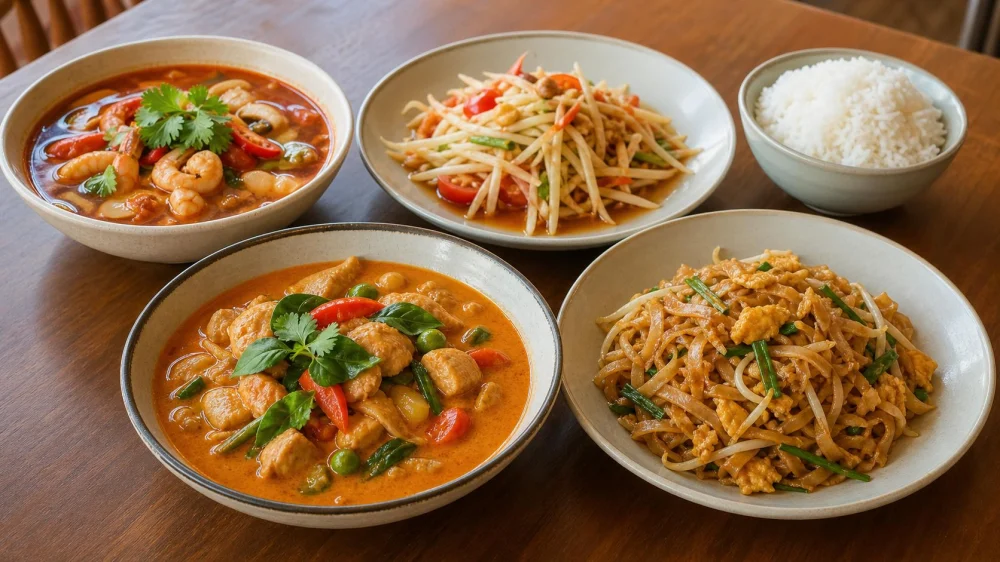
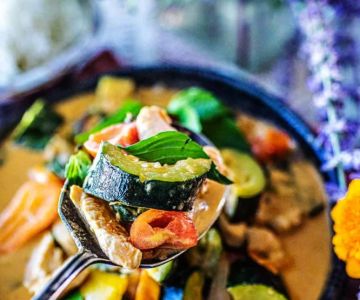
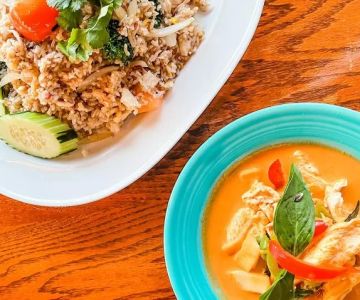
Thai curries combine curry paste with liquid and supporting ingredients, but they are not one uniform category. Red and green curries commonly use coconut milk in many restaurant preparations; green curry often has a fresh herb character, while red curry can feel rounder and chile-forward. Panang is frequently thicker and richer, and massaman often includes warm spices and potatoes.
These are useful orientation points, not guaranteed recipes or heat rankings. Color does not reliably predict how spicy a particular restaurant's curry will be. Ask about the kitchen's standard heat, whether coconut milk is used, and which curry fits the flavor you want.
Decode soups and salads
Tom indicates a boiled soup family. Tom yum is commonly associated with a bright hot-and-sour profile, aromatic herbs, and chiles. Tom kha typically adds coconut milk and galangal for a creamier result. Ingredients and presentation vary, and some menus offer multiple proteins or serving sizes.
Thai salads, often described with terms such as yam or larb, may emphasize lime, herbs, chiles, toasted rice powder, or savory seasonings rather than leafy greens. Green papaya salad, or som tam, combines crisp shredded papaya with a pounded dressing. Confirm heat and ingredients because these dishes can include fish sauce, dried shrimp, peanuts, or other allergens depending on the recipe.
Choose noodles or rice dishes
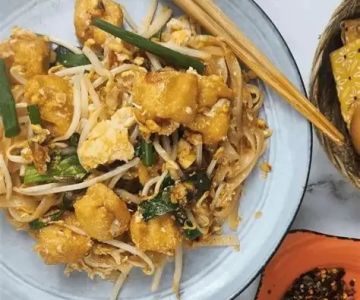
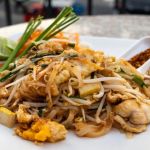
- Pad Thai: stir-fried rice noodles with a sweet-sour-savory balance; recipes often include egg and peanuts.
- Pad see ew: broad rice noodles with a darker savory-sweet sauce and vegetables.
- Drunken-style noodles: a broad-noodle stir-fry often built around chiles, garlic, and basil; the name does not necessarily mean alcohol is present.
- Khao soi: a northern noodle curry commonly combining rich broth and contrasting soft and crisp noodles.
- Fried rice: a complete wok-cooked dish whose seasoning and garnishes vary by version.
Choose noodles when you want a self-contained plate with sauce integrated throughout. Choose steamed rice with curry or stir-fries when you want to control each bite and share several dishes.
Explore stir-fries and shared plates
Stir-fry sections may highlight basil, garlic, ginger, cashews, vegetables, or chile paste. Look beyond the selected protein: the named herb or sauce usually tells you more about the dish's direction. Pad kra pao, for example, centers on a basil-forward stir-fry, though the basil variety and exact preparation differ by restaurant.
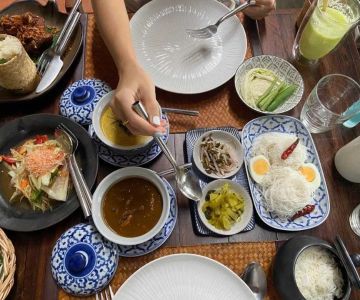
Whole fish, grilled meats, omelets, and regional specials may be designed for sharing. Ask whether rice is included and how many people a dish generally serves. When a menu offers a chef's special, it may be a better window into the restaurant's focus than the broadest familiar category.
Build a balanced order
- Pick one anchor. Choose the curry, noodle, fish, or regional specialty the group most wants to try.
- Add contrast. Pair a rich curry with a bright salad, grilled item, vegetable stir-fry, or clear soup.
- Vary texture. Combine crisp, fresh, grilled, and saucy elements rather than several soft dishes.
- Choose a starch deliberately. Ask what comes with rice and whether noodle plates are intended as individual servings.
- Set heat per dish. Do not assume every item needs the same spice level.
- Confirm portions. Restaurant styles vary, so ask before over-ordering.
For a first visit, a useful three-part order is one house specialty, one vegetable or salad dish, and one contrasting soup, curry, or grilled plate with the appropriate rice. It is not ideal to judge an entire regional cuisine from a single standardized takeout dish.
Allergies and dietary needs
Do not assume a dish is vegetarian, vegan, gluten-free, nut-free, shellfish-free, or soy-free based on its visible ingredients. Fish sauce, oyster sauce, shrimp paste, stocks, egg, soy sauce, peanuts, and shared equipment may not be obvious. Recipes and cross-contact controls vary.
Tell the restaurant clearly that you have an allergy, name the allergen, and ask whether staff can verify ingredients and cross-contact risk with the kitchen. A preference and a medically diagnosed allergy require different conversations. If the restaurant cannot answer confidently or cannot accommodate the risk, choose another dish or establishment. For personal medical advice, consult an appropriate healthcare professional.
Frequently asked questions
Is green curry always hotter than red curry?
No. Paste, chile quantity, recipe, and restaurant heat scale vary. Ask which preparation is milder or hotter in that kitchen.
Does “drunken noodles” contain alcohol?
Not necessarily; many versions do not. The name has multiple popular explanations, so ask the restaurant if alcohol avoidance matters.
Is all Thai food served family-style?
No. Curries and entrées may be shared, while noodle and fried-rice dishes are often ordered as individual plates in U.S. restaurants. Confirm the restaurant's portion style.
What is a good order for someone new to Thai food?
Choose one familiar format, such as a noodle dish, then add a contrasting soup, salad, curry, or house specialty. Describe flavors you enjoy instead of asking for a universal “best” dish.
Can every dish be made mild?
No. Some pastes, dressings, or prepared components already contain chiles. Ask what can genuinely be adjusted without misrepresenting the dish.
Evidence and cultural notes
Dish descriptions here reflect broadly recognized restaurant categories and common preparations, not fixed formulas. Thai cuisine contains strong regional, family, and restaurant variation, and U.S. menus may adapt format, sweetness, ingredients, and portion style. The individual kitchen is the authoritative source for its recipe, allergens, heat, and serving size.
Conclusion and next steps
Before ordering, choose a format, desired flavor direction, comfortable heat, and one new dish to explore. Use Thai Food to compare local restaurants and menu styles, then ask the restaurant about current specialties and ingredients. A confident order is not the one with the most famous names; it is the one that creates useful contrast and fits the diners at the table.

 Kornchawan4.0 (4 reviews)
 Baan Ta Thai Cuisine4.0 (129 reviews)
 Maliwans Thai Kitchen4.0 (135 reviews)
 Bangkok House Restaurant4.0 (186 reviews)
 Thai Ocha Cafe4.0 (318 reviews)
 Ameri Thai Bistro4.0 (179 reviews)
 Thai Food Ingredient Spotlight: Dried Kaffir Lime — What & How
 The Best Thai Food Podcasts to Cook Along With
 The Best Thai Food Recipes for Sharing with Friends & Family
 Thai Food for Busy Couples: Quick & Delicious Thai Meals
 Thai Food Ingredient Spotlight: Kaffir Lime Leaves & Their Unique Aroma
 How to Make Thai Mango Sticky Rice (Khao Niew Mamuang) Step-by-Step