
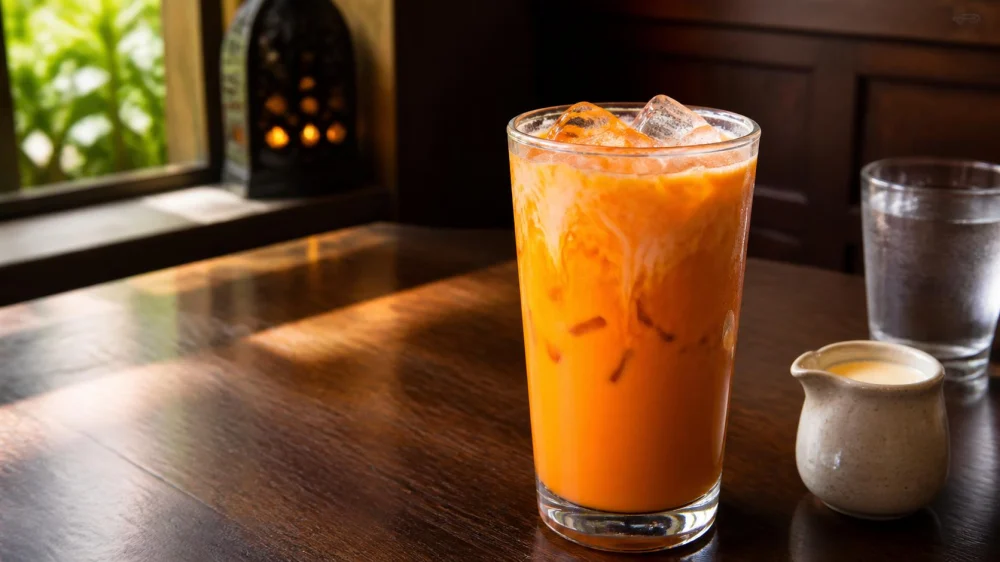
Thai Iced Tea: Sweetness, Milk, Caffeine, and Ice
On this page
Quick answer
Thai iced tea is usually a strongly brewed, sweetened tea served cold with milk or another creamy ingredient, but recipes differ by restaurant. Before ordering, ask whether the drink is pre-mixed, whether sweetness can be reduced, which milk products it contains, and whether the tea is caffeinated. Requesting less ice changes dilution and serving temperature, but it may not mean the glass contains more tea.
If you have an allergy or dietary restriction, do not rely on the drink's colour or the menu name. Ask staff to check the recipe, packaged mix, toppings, and preparation method.
What the name may cover
Restaurants may brew a house tea, use a commercial Thai tea blend, or prepare a concentrate in advance. The drink may include sugar, sweetened condensed milk, evaporated milk, dairy creamer, coconut milk, or another product. Some versions arrive layered; others are mixed before service.
The familiar orange colour can vary with the tea blend and preparation. Colour alone does not reveal sweetness, milk content, caffeine level, or authenticity.
Ask about sweetness before ordering
Many kitchens sweeten a batch or concentrate before service, so “half sweet” may not be possible. Ask a specific question: “Is the sweetness already mixed into the tea, or can it be adjusted for this glass?” If adjustment is available, use the restaurant's stated scale rather than assuming percentages mean the same thing everywhere.
- Choose the regular recipe if you want the restaurant's intended balance.
- Ask for a lower sweetness level when the drink is made to order.
- If the base is fixed, ask whether unsweetened tea or water can be served alongside it.
- Remember that added condensed milk or syrup may change both sweetness and texture.
Clarify the milk ingredients
“With milk” is not a complete ingredient description. Ask whether the recipe uses dairy milk, condensed milk, evaporated milk, powdered creamer, coconut milk, or a combination. A plant-based option does not automatically make the whole drink dairy-free because the base or topping may already contain milk.
For a food allergy, tell staff the allergen clearly and ask whether they can verify every component and avoid cross-contact. If they cannot confirm the recipe or preparation, choose a simpler sealed beverage or another option you can assess.
Plan for caffeine
Thai iced tea is commonly made from tea and should generally be treated as caffeinated unless the restaurant confirms otherwise. The amount can vary with the blend, dose, steeping time, concentrate, and serving size. A darker colour or stronger flavour is not a reliable caffeine measurement.
If caffeine affects your sleep, medication plan, pregnancy guidance, heart symptoms, or anxiety, ask whether a caffeine-free alternative is available and follow advice from your clinician. Children and caffeine-sensitive guests may prefer a non-caffeinated drink.
Understand ice and dilution
Ice chills the drink and gradually dilutes a sweet, concentrated base. Drinking immediately may taste richer; waiting can soften sweetness and strength. “Less ice” may produce a warmer or stronger-tasting drink, and restaurants may keep the same measured portion rather than fill the extra space.
For takeaway, consider travel time. Ask for ice on the side only if the restaurant offers it, keep the drink cold, and do not leave a milk-containing beverage at room temperature for an extended period.
Pair it with the meal
The drink's sweetness and creamy texture can contrast with salty, spicy, grilled, or fried foods, but it can also make a rich meal feel heavier. Order one to share only if the restaurant allows it and each guest's allergy needs are compatible. Water remains useful alongside the meal, especially when eating spicy food.
Do not use the drink as a guaranteed remedy for chile heat. Dairy ingredients may change the sensation for some people, but recipe strength and individual response vary.
A practical ordering checklist
- Confirm the serving size and whether refills are included.
- Ask if the tea is brewed in-house, made from a concentrate, or pre-mixed.
- Check whether sweetness can actually be changed.
- Verify every milk, creamer, syrup, and topping when relevant.
- Assume it contains caffeine unless staff confirms a caffeine-free recipe.
- Choose the ice level with dilution and travel time in mind.
- Review the final drink before leaving if it is takeaway.
Important limitations
This is general restaurant-ordering guidance, not nutrition or medical advice. Thai iced tea recipes, portion sizes, sugar, caffeine, allergens, and preparation practices vary widely. Restaurant staff and current product labels are the best sources for a specific drink; a qualified clinician can advise on personal dietary or health restrictions.
Evidence notes
Thai SELECT, a programme associated with Thailand's Department of International Trade Promotion, lists Thai tea among recognised Thai food products and restaurant offerings. That supports the drink's place in contemporary Thai dining, but it does not establish one universal recipe. Practical ordering therefore depends on checking the individual restaurant's ingredients and preparation.
FAQ
Is Thai iced tea always orange?
No. Colour varies by blend and recipe, and it does not reliably identify the ingredients.
Can a restaurant make it less sweet?
Sometimes. Ask whether the base is already sweetened before requesting a lower level.
Is Thai iced tea dairy-free?
Not necessarily. Many recipes use dairy or creamer; verify the base and topping.
Does it contain caffeine?
Usually treat it as caffeinated unless the restaurant confirms a caffeine-free preparation.
Will less ice give me more tea?
Not always. The restaurant may use the same measured serving and leave more space.
Can I keep a takeaway Thai tea for later?
Keep it cold and follow food-safety guidance for milk-containing drinks; when in doubt, discard it.
Next steps
At the restaurant, ask four short questions: Is the base already sweetened? Which milk or creamer is used? Is it caffeinated? Can the ice level be changed? Then choose the size and recipe that fit your meal and dietary needs.

 Pad Thai Restaurant4.0 (619 reviews)
 TapAsia Asian Tapas4.0 (288 reviews)
 Pho &Thai Westborough4.0 (132 reviews)
 ChuChok Thai4.0 (111 reviews)
 Origin French Thai4.0 (986 reviews)
 My Thai Cafe4.0 (173 reviews)
 Thai Food Ingredient Guide: Discover the Difference in Thai Oyster Sauce
 How to Make Thai Food That’s Office-Friendly & Easy to Pack Meals
 The Best Thai Food Restaurants in Los Angeles According to Locals
 Thai Food Ingredient Guide: Lemongrass — Uses, Pairings & Storage
 How to Make Southern Thai Seafood Dishes at Home: Authentic Flavors Guide
 Thai Food + Wine Pairing: What Works and What Doesn’t