Yam, Larb, or Som Tam? How Thai Salads Differ
In this guide
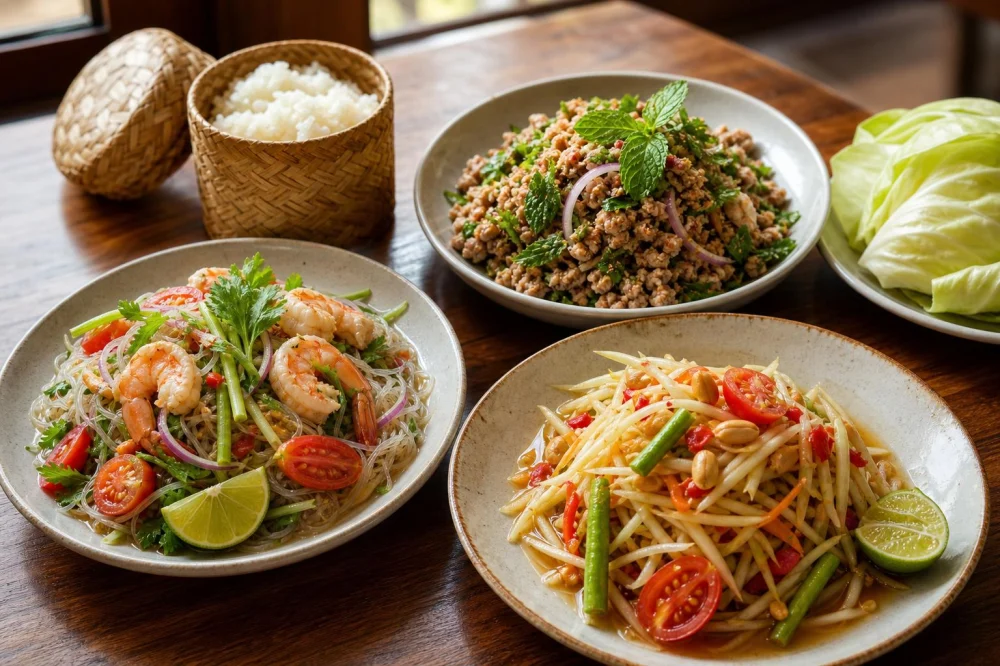
Yam, larb, and som tam are often grouped under “Thai salads” on English-language menus, yet they do not describe one formula. Yam is a broad family of tossed dishes with a bright dressing; larb is a chopped or minced mixture associated especially with Laos and Thailand's Isan region; som tam is a pounded salad best known in its green papaya form. Each has many regional and restaurant variations.
Bangkok Room Ansonia
AnsoniaNaugatuck Valley Planning RegionConnecticut
76 Main St, Ansonia, CT 06401, USA
Quick answer
Choose yam when you want a tangy tossed combination that might feature seafood, meat, noodles, eggs, mushrooms, or vegetables. Choose larb for a savory chopped mixture with herbs and, in many versions, toasted rice powder. Choose som tam for a crisp, juicy, pounded salad—often shredded green papaya—with chile, lime, and a sweet-salty dressing. Ask which regional version the restaurant serves because ingredients, fermentation, sweetness, and heat vary substantially.
Thai Avenue
BristolNaugatuck Valley Planning RegionConnecticut
562 Farmington Ave, Bristol, CT 06010, USA
Thai “salad” is a broad English label
In American dining, “salad” may suggest leafy greens and a separate dressing. These Thai dishes are better understood as families of seasoned mixtures. Herbs, aromatics, meat, seafood, noodles, fruit, or shredded vegetables may be central, and the sauce is usually integrated before serving.
The names on a menu often combine a technique or style with the featured ingredient. One yam may contain glass noodles, another grilled beef. One larb may use chicken, another mushrooms. One som tam may be sweet-tart and familiar, another deeply savory with fermented fish.
Transliteration varies. You may see yum for yam, laab or laap for larb, and som tum for som tam. Spelling alone does not indicate authenticity, heat, or exact ingredients.
What to expect from yam
Yam refers broadly to dishes mixed or tossed with a lively dressing. Lime juice, fish sauce, chiles, and sometimes sugar are common, often joined by shallot, onion, celery, cilantro, mint, tomato, or other aromatics. The featured component determines the texture and weight of the dish.
Yam woon sen commonly centers on glass noodles with herbs and may include pork, shrimp, or seafood. Yam nua typically features beef. Other menus may offer versions with eggs, canned fish, mushrooms, fried ingredients, sausage, seafood, or vegetables.
Do not assume every yam is light, raw, meat-free, or built on lettuce. Ask about the main ingredient, whether it is cooked, and whether the dressing contains fish sauce or other animal ingredients.
What to expect from larb
Larb is important in Lao cuisine and in Thailand's northeastern Isan food culture, with variations elsewhere. Many restaurant versions use cooked minced chicken, pork, beef, duck, fish, or mushrooms seasoned with lime, fish sauce, chile, shallot, scallion, and herbs. Toasted ground rice often adds a distinctive nutty aroma and slightly sandy texture.
The balance may be tart, savory, herbal, and hot rather than sweet. Mint leaves, cilantro, and scallions can make the mixture especially fragrant. It may arrive warm, room temperature, or cool, accompanied by raw vegetables, herbs, cabbage, cucumber, and sticky rice.
Some traditional preparations and regional names involve raw or undercooked meat, blood, bile, or other ingredients unfamiliar to many diners. A typical U.S. restaurant larb is often cooked, but never assume. Ask directly if raw or undercooked animal food is a concern.
What to expect from som tam
Som tam is made by pounding and mixing ingredients in a mortar so chiles, garlic, dressing, and vegetable juices combine while the main ingredient retains crunch. The widely known central Thai-style green papaya salad often includes shredded unripe papaya, tomato, long bean, lime, fish sauce, palm sugar, chiles, and peanuts, sometimes with dried shrimp.
Other versions may use cucumber, green mango, corn, fruit, or mixed vegetables. Isan- and Lao-influenced papaya salads can include fermented fish sauce, pickled crab, or other savory elements and may be less sweet and more pungent than a restaurant's standard house version.
The pounding method bruises aromatics and helps the dressing penetrate. Som tam should not be reduced to “coleslaw with spice”; its crunch, juices, chile, salt, sourness, and fermentation are deliberately integrated.
Compare flavor, texture, and format
- Yam: the broadest tossed category; texture follows the featured ingredient, from slippery noodles to crisp vegetables or tender seafood.
- Larb: usually chopped or minced, herb-forward, savory and tart, often with toasted rice powder and fresh accompaniments.
- Som tam: pounded and crisp, juicy, chile-forward, commonly based on shredded green papaya but available in many variations.
All three can be sour, salty, aromatic, and spicy. The distinction is not a rigid flavor chart. Technique, principal ingredient, regional context, and the restaurant's own recipe are more useful than assuming one is always sweeter or hotter.
How to choose at a restaurant
First choose the format you want: a tossed mixed dish, a minced herbal dish, or a crunchy pounded dish. Then ask what variations are available and what the house version contains. A concise order might be: “Which som tam is your standard version, and does it include dried shrimp, peanuts, or fermented fish?”
For yam, identify the featured protein or vegetable and whether glass noodles are included. For larb, ask which protein is used, whether it is fully cooked, and whether toasted rice powder is part of the seasoning. For som tam, ask whether it is the sweeter central-style version or a version with fermented fish or crab.
Requesting a modification may be possible, but removing a core seasoning can change the dish greatly. Ask what the kitchen can prepare well rather than designing a completely new recipe at the table.
Ask about chile heat clearly
“Medium” is subjective. Tell the server what you can comfortably eat and ask how the restaurant defines its scale. If you want flavor with less heat, request fewer chiles rather than saying “no spice” and expecting the same balance.
Som tam is pounded with chiles, so heat spreads through its juices. Larb and yam dressings also distribute chile throughout the mixture. Picking out visible pieces later may not make the dish mild.
Start conservatively at an unfamiliar restaurant. Extra chile can often be added, but excessive heat cannot be removed. More plain rice and cooling, unspiced accompaniments can make each bite gentler; they do not chemically erase capsaicin.
Build a balanced shared meal
These dishes often work as part of a meal rather than as isolated courses. Sticky rice is a classic partner for Isan-style larb and som tam. Plain jasmine rice can accompany many yam dishes and other shared plates. Raw cabbage, cucumber, herbs, and long beans provide crunch and a fresh counterpoint.
Balance a bright, chile-heavy salad with grilled chicken, grilled pork, a mild egg dish, vegetables, soup, or another item suited to the group. Avoid ordering several dishes with the same intense sour-hot profile unless that is what everyone wants.
For sharing, order enough rice and use serving utensils. Season your own portion rather than adding table condiments to the communal plate.
Check allergens and dietary needs
Fish sauce, dried shrimp, fermented fish, shrimp paste, peanuts, soy, shellfish, and gluten-containing sauces may appear depending on the recipe. Pickled crab can be part of some papaya salads. Ingredients can be in the dressing even when they are not visible.
Vegetarian or vegan versions require more than removing the meat; the dressing and fermented seasonings must also be checked. Mushroom larb, for example, is not automatically vegan if fish sauce remains. Ask whether the restaurant has a tested alternative rather than assuming a simple omission works.
For a medically significant allergy, notify staff before ordering and discuss cross-contact, shared mortars, cutting boards, fryers, and utensils. If the restaurant cannot answer safely, choose a different dish or establishment. People at higher risk from foodborne illness should avoid raw or undercooked animal foods.
Frequently asked questions
Is larb always made with meat?
No. Meat versions are common, but fish, mushroom, tofu, and other adaptations exist. Confirm the dressing if vegetarian or vegan suitability matters.
Is som tam always green papaya salad?
Green papaya is the best-known base, but cucumber, mango, corn, fruit, and other pounded variations appear on Thai menus.
Which one is the least spicy?
None is inherently the mildest. Chile quantity and the house recipe determine heat. Ask how each version is prepared and request a conservative level.
Does larb contain peanuts?
Toasted rice powder is common and is not peanut, but recipes and garnishes vary and cross-contact is possible. People with allergies must ask the restaurant directly.
Can these dishes be a complete meal?
They can be satisfying with rice and accompaniments, but portion size and composition vary. In Thai-style shared dining, they often contribute one flavor and texture among several dishes.
Choose the style, then the variation
Choose yam for a bright tossed mixture, larb for a chopped, herb-forward preparation, or som tam for crisp ingredients pounded with a vivid dressing. Then learn the restaurant's specific version: main ingredient, regional style, chile level, fermentation, cooking method, and allergens. That two-step approach is more reliable than treating every item translated as “salad” as interchangeable.

 Saap4.0 (355 reviews)
 Land of Thai4.0 (181 reviews)
 Pho And Thai4.0 (220 reviews)
 Malii Gramercy4.0 (1501 reviews)
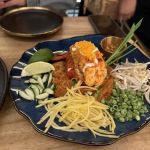 SaiTong Thai4.0 (1383 reviews)
 Xay’s Kitchen Laos & Thai Cuisine4.0 (69 reviews)
 Thai Food for Date Night In: Candlelight + Curry
 The Best Thai Food Recipes for Your Next BBQ — Thai Grilled Skewers & Sides
 The Best U.S. Cities to Move to if You Love Thai Food
 Thai Food Ingredient Guide: Discover the Difference in Thai Oyster Sauce
 How to Make Thai Food That’s Inspired by Thai Street Markets
 Thai Coconut Cream: How to Choose & Use It in Thai Cooking