Khao Soi Guide: Northern Thai Curry Noodles, Toppings, and Heat
On this page
Quick answer
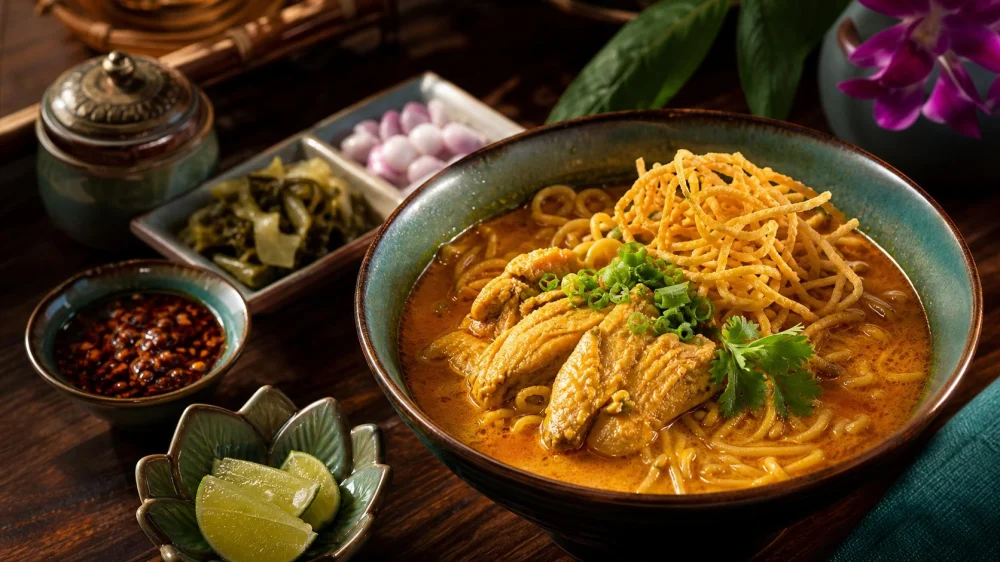
Khao soi is a northern Thai curry noodle dish commonly built from a coconut-milk broth, soft egg noodles, chicken or beef, and a crown of crisp fried noodles. Pickled mustard greens, sliced shallots, lime, and chile oil often arrive alongside so each diner can adjust acidity, crunch, salt, and heat.
Ask what protein, noodle, curry paste, stock, fish sauce, soy sauce, coconut, fried topping, and garnishes the restaurant uses. Versions vary, and vegetarian does not automatically mean vegan or free from fish and shrimp ingredients. Add condiments gradually; the original bowl already has a composed balance.
Meet a northern Thai noodle dish
Khao soi is strongly associated with Chiang Mai, Chiang Rai, and the wider northern Thai or Lanna food landscape. It reflects regional trade and cultural exchange, and neighboring cuisines have related curried noodle dishes. Restaurant versions outside Thailand may emphasize different spice blends, proteins, noodle types, or broth thickness.
Thai SELECT, a Thai Ministry of Commerce certification program, describes khao soi gai as northern-style curried noodle soup with chicken, coconut milk, egg noodles, chile oil, herbs, and fried noodles. Use that as a useful reference, not a rule that every family or restaurant must follow identically.
Ricky's Thai Hillsborough
Hillsborough TownshipSomerset CountyNew Jersey
649 US-206, Hillsborough Township, NJ 08844, USA
Understand the curry broth
The broth often starts with curry paste or ground aromatics cooked with coconut milk or cream, then diluted and seasoned. Turmeric and curry spices contribute the golden-orange color; dried chile adds warmth; coconut brings body and sweetness. Stock, fish sauce, soy sauces, salt, and palm sugar may deepen flavor.
One bowl can be light and soup-like, another rich and coating. A visible layer of chile or coconut oil may be intentional. Before adding lime or condiments, taste a spoonful of broth by itself and notice spice, sweetness, savoriness, and coconut.
Notice the two noodle textures
Soft egg noodles form the base and absorb broth while retaining some chew. Fried noodle strands on top add height and crunch, then gradually soften where they touch the curry. That contrast is one of the bowl’s signatures.
Some restaurants use wheat noodles of different widths, rice noodles, or an alternative for dietary needs. A gluten-free substitution may change both texture and flavor and does not make the whole dish gluten-free if soy sauce, shared fryers, stock, or curry paste still contain gluten or cross-contact.
Choose the protein or main filling
Chicken khao soi often comes with a drumstick, thigh, sliced meat, or bone-in piece that has simmered in the curry. Beef can be braised until tender. Pork, seafood, tofu, mushrooms, and plant-based versions also appear, especially outside northern Thailand.
Ask whether meat is bone-in and whether the broth is shared across protein options. A tofu bowl may still use chicken stock, fish sauce, shrimp paste, or the same fryer as animal products. If you prefer no bone, request a preparation the kitchen already supports rather than trying to debone a very hot piece in a full bowl.
Use the toppings in stages
Pickled mustard greens add acidity, salt, and fermentation; raw shallots add sharpness and crunch; lime brightens and can reduce the perception of richness; chile oil increases heat and toasted aroma. Cilantro and scallion may already garnish the bowl.
Add a little of one topping, taste, and then adjust. Too much pickle or lime at once can dominate the curry, and chile oil can be difficult to reverse. Keep some fried noodles dry until later if you want lasting crunch.
Ask how heat is built
Spice may be cooked into the curry paste, spooned in as chile oil, or both. “Medium” is not standardized between restaurants. Ask whether the base broth can be changed, what heat level the kitchen considers typical, and whether extra chile can come separately.
For a mixed group, order the milder supported base and let diners add chile oil individually. Coconut richness can soften the first impression of heat, but chile intensity may build as you eat. Medical sensitivities require ingredient discussion, not only a numeric spice scale.
Check allergens and dietary needs
Potential allergens include wheat and egg in noodles, coconut, soy, fish, shellfish in paste or seasoning, peanuts in some house versions, and shared fryer cross-contact. Garnish trays and condiment spoons can introduce ingredients not listed in the main menu description.
Tell the server the specific allergy before ordering and ask the kitchen to check the broth, paste, noodles, topping, oil, and fryer. “No peanuts on top” is not an adequate plan for a severe allergy if the kitchen cannot verify ingredients and handling.
Mix and eat the bowl
Move the crisp noodles aside, stir the soft noodles from the bottom, and distribute a small amount of garnish. Use chopsticks or a fork for noodles and a spoon for broth. Let bone-in meat cool enough to handle and use the spoon and fork rather than splashing the curry.
Khao soi is best while hot, but curry broth can retain heat beneath the noodle topping. Take the first bite carefully. If taking leftovers, ask the restaurant to package crisp noodles separately and follow local food-safety guidance for prompt refrigeration and reheating.
Pair it with the rest of the meal
Because khao soi combines noodles, coconut, curry, and protein, it can be a complete main dish. Balance it with grilled vegetables, a fresh herb-forward salad, or a lighter appetizer rather than another rich coconut curry. Share one bowl only if the restaurant provides serving utensils and portions support it.
Cold water, sparkling water, unsweetened tea, or a lightly sweet nonalcoholic drink can refresh the palate. Beer may pair well for some diners, but alcohol is optional and should be consumed responsibly. Keep the focus on tasting the broth and toppings as they evolve.
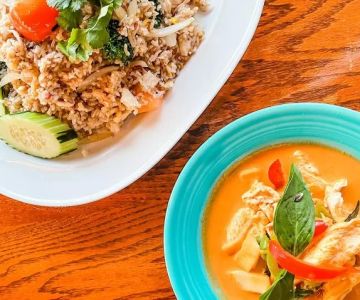

 Rice Pot Thai Restaurant4.0 (441 reviews)
 Thai Elephant 24.0 (447 reviews)
 My Thai4.0 (109 reviews)
 Ricky’s Thai Bernardsville4.0 (75 reviews)
 Sawatdee Restaurant4.0 (369 reviews)
 Seth Thai Restaurant4.0 (92 reviews)
 Thai Food Ingredient Spotlight: Palm Sugar – How to Substitute & Use
 How to Make Thai Food That’s Great for Lunchboxes & On-the-Go
 The Best Thai Food Restaurants in Kansas City for Hidden Gems
 Thai Grilled Chicken and Skewers: A Restaurant Ordering Guide
 : How to Make the Most of Thai Food in the Microwave
 How to Make Southern Thai Seafood Dishes at Home