
Thai Dipping Sauces Guide: Nam Jim Styles and Pairings
On this page
Quick answer
Nam jim broadly means a dipping sauce, not one fixed recipe. A Thai restaurant may serve a bright chile-lime sauce with seafood, a sweet chile sauce with fried snacks, a roasted-rice and tamarind style with grilled meat, or a garlic-vinegar sauce with chicken. Ask what comes with the dish, taste a small amount first, and confirm allergens rather than judging by color.
A Thai dipping sauce is a concentrated accompaniment intended to add or balance salt, sourness, sweetness, heat, aroma, or texture. The dish and sauce are often designed as a pair, but recipes and names vary by cook, region, restaurant, and family.
What nam jim means on a menu
The Thai words commonly written in English as “nam jim,” “nam chim,” or another transliteration can refer to dipping sauce as a category. The rest of the name, the dish description, or the server’s explanation usually tells you more about the intended flavor and pairing.
Do not expect every restaurant to use the same English spelling or recipe. A menu may:
- Name a sauce for the food it accompanies, such as seafood or chicken.
- Name a style or regional association.
- Use a house name without listing all ingredients.
- Describe only the dominant flavor, such as sweet chile or spicy lime.
- Serve a condiment automatically without printing it on the menu.
The practical question is not “Which nam jim is the official one?” but “What is in this restaurant’s version, how does it taste, and which dish is it meant to complement?”
Common Thai dipping sauce styles
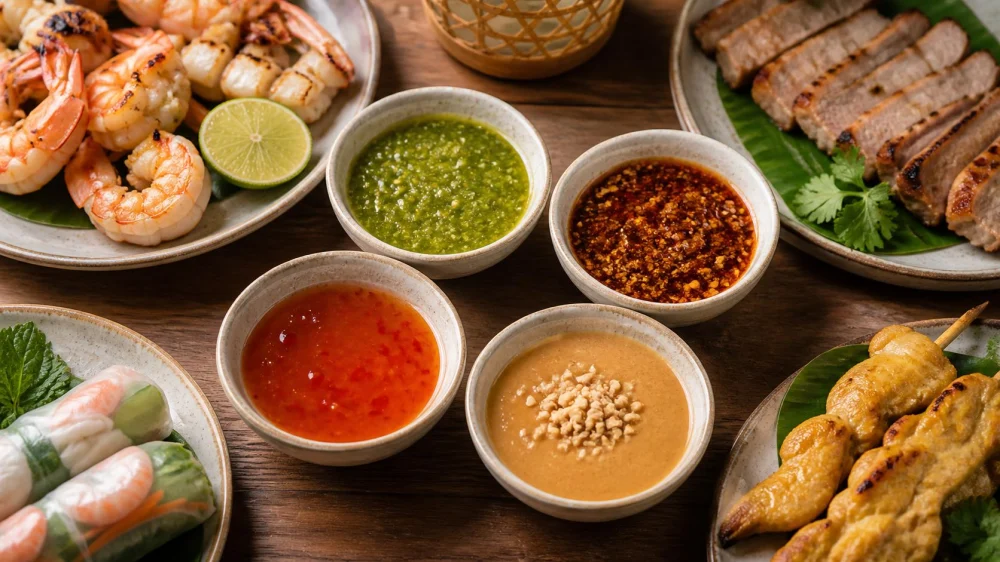
Seafood-style chile and lime sauce
Often called nam jim seafood, this style is typically sharp, spicy, salty, and aromatic, with chile, lime, garlic, and a savory seasoning component. It commonly accompanies grilled, steamed, or boiled seafood. Green color does not guarantee mild heat, and the exact herbs and sweetening vary.
Sweet chile sauce
A glossy sweet, tangy, and mildly to moderately hot sauce may be served with fried appetizers, spring rolls, chicken, or snacks. In English it may appear simply as sweet chile sauce. Texture and heat vary; some versions include visible chile and garlic pieces.
Roasted-rice dipping sauce
Nam jim jaew or similarly spelled names often describe an Isan-associated sauce with a salty, sour, sweet, and chile-forward profile plus the aroma and texture of toasted rice powder. It is frequently paired with grilled meat. Herbs, tamarind, lime, and seasoning choices differ by recipe.
Chicken dipping sauce
Nam jim gai may refer to a sweet chile-style accompaniment for chicken, while a restaurant specializing in boiled or grilled chicken may offer a more specific house sauce. Ask rather than assuming that every “chicken sauce” tastes or contains the same ingredients.
Garlic and vinegar chile sauce
Some dishes arrive with a thin, bright sauce based on vinegar, chile, garlic, and sweetness. It can cut through fried or rich textures. The menu may not use a standard Thai name for it.
Peanut-forward sauce
U.S. Thai menus may serve a peanut-based dipping sauce with satay or other items. This is visually and texturally distinct from many thin nam jim styles, but ingredients still vary. Peanut presence should be treated as an allergen question, not inferred only from appearance.
How to choose and taste a sauce
- Start with the dish. Grilled meat, seafood, fried snacks, fresh vegetables, and rice-based dishes may use sauces with different balances and textures.
- Ask for a short flavor description. Useful words include sour, salty, sweet, smoky, garlicky, herbaceous, and chile-hot.
- Confirm whether it is already included. Some dishes are seasoned to be eaten with the provided sauce; ordering an extra condiment may not be necessary.
- Taste a small amount by itself. Use a clean utensil and avoid pouring it over the entire plate before you understand its intensity.
- Try it with one bite. The sauce may taste more balanced with the intended food than alone.
- Add gradually. Concentrated salt, acid, sweetness, and heat can overwhelm delicate flavors when used heavily.
- Keep sauces separate when sharing. Use serving utensils and avoid double-dipping so others can make their own choices.
“Best” is situational. A sharp seafood sauce is useful when you want brightness and heat; a sweet chile sauce is often more approachable with a crisp fried item; a toasted-rice sauce adds texture and roasted aroma to grilled food. None is a universal replacement for another.
Allergens and dietary questions
Dipping sauces can contain ingredients that are not obvious from color or texture. Possible ingredients include fish sauce or other seafood-derived seasoning, soy, wheat-containing sauces, peanuts, sesame, dairy in a nontraditional house preparation, or shared-kitchen contact.
If an allergy, celiac disease, or other medical dietary restriction is involved:
- Name the specific allergen and ask the restaurant to check the sauce recipe and preparation process.
- Ask whether the sauce is made in-house, purchased, or portioned near other sauces.
- Confirm whether utensils, blenders, fryers, or prep surfaces are shared when cross-contact matters.
- Do not treat “vegetarian,” “vegan,” “gluten-free,” or “peanut-free” as interchangeable claims.
- Decline the sauce if staff cannot verify what you need for safety.
For preference rather than allergy, a restaurant may be able to omit or serve a sauce on the side, but a premade batch may not be adjustable. Ask before ordering instead of requesting a remake after the dish arrives.
Restaurant ordering checklist
- Which dipping sauce normally comes with this dish?
- Is the sauce mainly sour, sweet, salty, spicy, or roasted in flavor?
- How hot is it relative to the restaurant’s other sauces?
- Does this version contain my specific allergen or dietary concern?
- Is it made in-house, and can staff check the ingredient information?
- Can it be served on the side without changing the dish preparation?
- Is there a less-hot alternative that still fits the dish?
Local Thai restaurants across the United States may use different spellings and heat scales. A calm, specific question gives more useful information than asking whether a sauce is “authentic” or “normal.”
Limitations and important notes
- This guide describes broad menu patterns, not fixed formulas or a complete map of Thai regional sauces.
- Restaurant recipes, transliterations, heat, sweetness, and pairings vary. The current menu and staff are the source for that establishment.
- Color is not a reliable measure of heat, allergens, freshness, or ingredients.
- People with medical dietary needs should use restaurant-specific ingredient and cross-contact information, not a general cuisine guide.
- Takeout sauce should be handled according to the restaurant’s storage directions and discarded when its safety is uncertain.
Sources and evidence notes
The descriptions reflect common Thai culinary patterns and U.S. restaurant menu usage: nam jim functions as a category of dipping sauces, and named versions balance chile, acid, sweetness, salt, aromatics, and texture for particular foods. Individual cooks and regions may use different proportions, ingredients, and names.
For verification, use the restaurant’s current menu, ingredient records, packaging for a purchased sauce, and direct staff confirmation. For culinary learning, compare recipes from established Thai cooks while recognizing that one recipe does not define every version.
Frequently asked questions
Is nam jim always spicy?
No. Many versions contain chile, but the type and amount vary, and some sauces emphasize sweetness, sourness, garlic, or roasted flavor. Ask about the specific sauce.
Is Thai sweet chile sauce the same as nam jim jaew?
No. Sweet chile sauce is generally glossy and sweet-tangy, while jaew commonly has a thinner, more savory-sour profile with chile and toasted rice texture. Restaurant recipes still vary.
Why is the seafood sauce green?
Fresh green chiles and herbs may contribute color, but recipes can also be red or mixed. Green does not reliably indicate the heat level.
Can I ask for the sauce without fish sauce?
You can ask, but a house batch may already be prepared. Request ingredient confirmation and ask whether a suitable alternative exists. Do not assume removing one ingredient makes the entire dish vegetarian or allergy-safe.
Should I pour the sauce over rice?
Use it according to preference and the dish. Start with a small amount on one bite. Many dipping sauces are concentrated and intended to accompany, not saturate, the food.
Next steps
At your next Thai restaurant meal, identify the sauce that comes with one dish and ask for its dominant flavors and key ingredients. Taste a small amount, then try it with the intended food. Note whether acid, sweetness, salt, heat, aroma, or toasted texture changes the bite, and use that experience to make a more specific choice next time.

 Thai Cuisine3.0 (414 reviews)
 Vientiane Thai Cuisine4.0 (238 reviews)
 Ra-Kang Thai Cuisine4.0 (179 reviews)
 East-West Grille on Wheels3.0 (2 reviews)
 the AM-THAI Williamsburg4.0 (735 reviews)
 Thai mis Delicias (Truck. 4)3.0 (14 reviews)
 The Best Thai Food Recipes for Hosting Friends & Family
 How to Make Thai Food That’s Great for Batch Cooking & Freezing
 Thai Food Ingredient Guide: Thai Chili Flakes — How Hot Are They Really?
 How to Make Thai Food That’s Freezer-Friendly & Reheat Well
 The Best Thai Food Recipes for Sharing with Friends & Family
 How to Make Thai Street-Style Pad See Ew at Home: A Simple Guide