
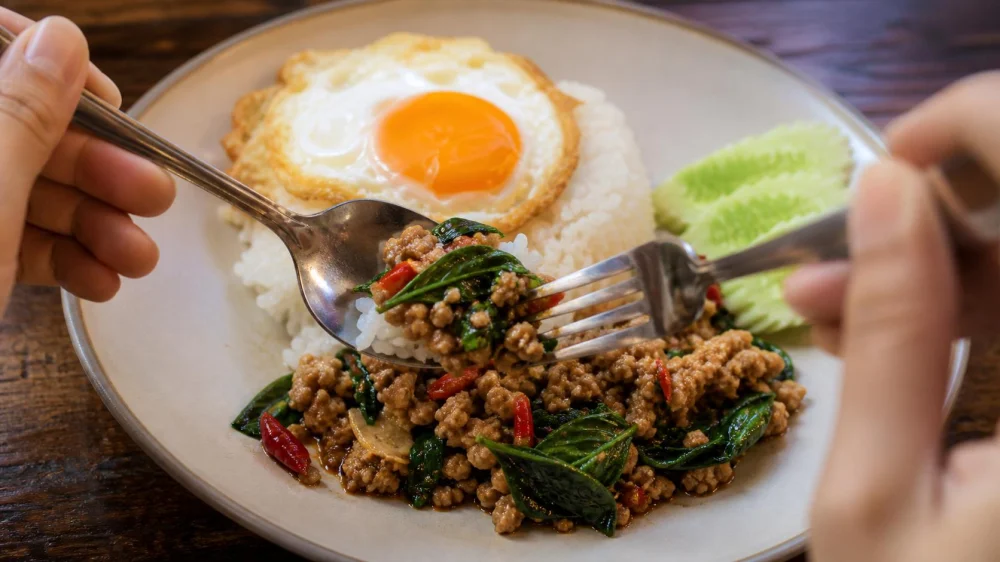
Pad Kra Pao Guide: Basil Stir-Fry, Rice, Egg, and Heat
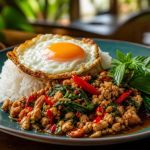
Pad kra pao is a fast, savory stir-fry commonly paired with rice and often topped with a fried egg. Its defining herbal note is associated with holy basil, but restaurant naming, spelling, ingredients, and available basil vary. Before ordering, choose a protein, ask how the kitchen handles heat, confirm the egg style, and identify allergens hidden in sauces and shared woks.
Quick answer
Ask what protein or vegetable options are available, whether the kitchen uses holy basil or another basil, how spicy the base is, and whether a fried egg is included. Expect a concentrated stir-fry rather than a large saucy curry. Mix small portions with rice, break the egg yolk only if desired, and use table condiments after tasting.

Understand the name
Menus may spell the dish pad kra pao, pad krapow, pad gaprao, or another transliteration. The wording usually points to a basil stir-fry, but the restaurant’s description matters more than spelling. Some versions include more vegetables or sauce to suit local preferences.
Do not assume every dish labeled “Thai basil” is the same. Thai sweet basil and holy basil have different aromas. Availability, season, and restaurant practice can shape the final plate.
Ninethai kitchen
PhiladelphiaPhiladelphia CountyPennsylvania
2829 W Girard Ave, Philadelphia, PA 19130, USA
Choose the main ingredient
Ground or chopped pork and chicken are common choices; beef, seafood, crispy pork, tofu, mushrooms, or mixed vegetables may also appear. Ground meat distributes sauce and chile through each bite, while sliced protein creates a different texture.
For tofu or vegetables, ask whether the wok sauce, stock, fish sauce, and oyster-style sauce match your dietary needs. Removing meat from the order does not automatically make the dish vegetarian or vegan.
Ask about basil
Holy basil offers a peppery, clove-like character and wilts rapidly in the hot wok. Thai sweet basil tends to be more anise-like. Some kitchens substitute another basil when holy basil is unavailable. A substitution can still make a pleasant stir-fry, but the aroma changes.
Fresh basil is generally added near the end so it wilts without disappearing. If you strongly prefer a particular style, ask rather than judging authenticity after the plate arrives.
Decide on the egg
A fried egg can add crisp edges and a rich yolk that softens the chile and sauce. It may be an optional extra rather than included. Ask how fully the yolk and white are cooked, especially for pregnant people, young children, older adults, and people with weakened immune systems.
For the lowest food-safety risk, request egg cooked until both white and yolk are firm. Confirm whether the egg is fried in shared oil if allergens or dietary restrictions matter.
Set a useful heat level
Traditional-style preparation may use fresh chiles pounded with garlic, so heat can be integrated rather than sitting only on top. Restaurant scales such as mild, medium, and hot are subjective. Explain your tolerance and ask whether chile can be reduced before cooking.
Taste with rice before adding more. Chile in fish sauce can increase salt as well as heat. A fried egg and extra plain rice may make the plate gentler, but they cannot remove the chile already present.
Check sauce and allergens
Possible ingredients include fish sauce, oyster sauce or an oyster-style alternative, soy sauce, seasoning sauce, stock, sugar, garlic, chile, and cooking oil. Concerns can include fish, shellfish, soy, wheat, egg, and cross-contact with peanuts, tree nuts, or sesame used elsewhere.
Tell staff about a food allergy before ordering. Ask about the exact sauce, wok, utensils, fryer, garnishes, and table condiments. A request for “no fish sauce” is incomplete if the base sauce or stock already contains fish or shellfish.
Build balanced bites
Begin with a small spoonful of stir-fry over rice. Add a little egg, cucumber, or other included side to compare richness and freshness. Because the stir-fry is intensely seasoned, spreading it across the rice creates a more even plate.
Use a serving spoon when sharing and keep raw garnishes separate from used utensils. Let a sizzling-hot plate cool before reaching across it. Watch for whole chile pieces if you prefer milder bites.
Store leftovers safely
Refrigerate cooked stir-fry, rice, and egg within two hours, or within one hour when the temperature is above 90°F. Separate shallow containers help food cool quickly. Do not leave cooked rice at room temperature for extended periods.
Reheat leftovers to 165°F, stirring and rotating so meat, sauce, egg, and rice heat evenly. Add a spoonful of water to rice if needed, and cover it to retain steam. Eat refrigerated leftovers within three to four days or freeze promptly.
Frequently asked questions
Is holy basil required?
It is strongly associated with the dish, but restaurants sometimes use another basil; ask what is available.
Is a fried egg always included?
No. It may be optional, so confirm the price and cooking preference.
Can the dish be mild?
Often, but integrated chile may limit adjustment. Ask before the wok is fired.
Is a tofu version vegan?
Not necessarily. Verify fish sauce, oyster sauce, stock, egg, and cross-contact.
Next steps
Choose your main ingredient, ask which basil is used, set a practical heat level, decide on egg doneness, and verify allergens in every sauce. Taste the finished stir-fry with rice before reaching for table condiments.
For leftovers, follow USDA guidance on safe cooling and reheating.


 Chon Tong Thai Kitchen and Dessert4.0 (162 reviews)
 Mama's Thai Cuisine4.0 (183 reviews)
 Origin Thai Bistro4.0 (208 reviews)
 Terra Thai4.0 (331 reviews)
 The Thai4.0 (530 reviews)
 Thai Spice3.0 (121 reviews)
 The Best Thai Food Recipes for Date Nights & Solo Nights
 How to Make Thai Food That’s Office-Friendly & Easy to Pack Meals
 Thai Food and Wellness: Thai Herbs That Might Boost Your Health
 Pad Kra Pao Guide: Holy Basil, Heat, Rice, and Fried Egg
 How to Make Thai Food That’s Flavourful with Basic Pantry Items
 How to Make Thai Food That’s Balanced for Both Flavor & Nutrition