Sai Ua vs Sai Krok Isan: Thai Sausage Guide
On this page
Quick answer
Sai ua is a fragrant northern Thai sausage commonly seasoned with herbs, spices, and chile. Sai krok Isan is a northeastern fermented sausage, commonly made with pork, rice, and garlic, with a tangy flavor. Choose sai ua for an aromatic, herb-forward bite; choose sai krok Isan for sourness and garlic. Ask about meat, spice, fermentation, accompaniments, allergens, and doneness.
Names and regions
Sai ua, also spelled sai oua, is associated with northern Thailand and Lanna cuisine. It is often described as an aromatic or spicy northern sausage. The filling and seasoning vary, but herbs and curry-like aromatics are central to its identity.
Sai krok Isan means a sausage associated with Isan, Thailand’s northeastern region. Rice supports fermentation and contributes to its recognizable sour character. On U.S. menus, the dish may be translated as northeastern sausage, fermented pork sausage, sour sausage, or Isan sausage.
Both names cover families of preparations rather than one standardized commercial formula. A restaurant’s recipe, casing, meat-to-rice ratio, heat, and fermentation level can differ from another restaurant’s version.
Flavor and texture
Sai ua is the better starting point when you enjoy lemongrass, herbs, warm spices, and chile. It is often sliced into rounds, making the seasoned interior visible. Depending on the kitchen, it can be juicy and coarse or firmer and more compact.
Sai krok Isan is the better choice when you want tanginess. Garlic is prominent, while the rice in the mixture can create a softer, distinctive texture. Fermentation does not mean the served sausage should be raw; the sausage is normally cooked before eating. Ask how sour the current batch is because fermentation and house style affect intensity.
How each sausage is served
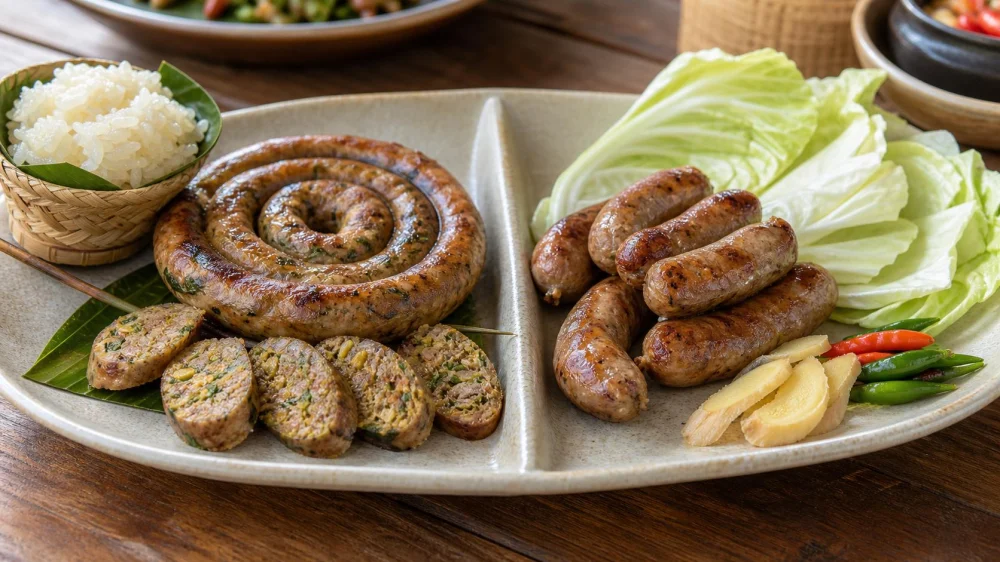
Northern-style sai ua may arrive on an appetizer platter with sticky rice, vegetables, chile dips, or pork rinds. It can also be served alone in sliced coils or incorporated into another dish. If the plate includes several items, identify each dip before combining flavors.
Sai krok Isan is often served in short links with fresh cabbage, ginger, chiles, and sometimes sticky rice. The fresh vegetables provide crunch; ginger and chile let the diner adjust sharpness and heat. Take one bite with a small amount of accompaniment before building a stronger combination.
How to choose
- Choose sai ua for layered herbal aroma, visible seasoning, and a northern Thai appetizer experience.
- Choose sai krok Isan for a garlicky, noticeably sour profile and fresh crunchy accompaniments.
- Order both when a restaurant offers a sampler and you want a clear regional comparison.
- Avoid guessing from color. Browning, chile, herbs, and casing differ, so confirm the name.
Neither sausage has one guaranteed heat level. Sour and spicy are separate sensations: sai krok Isan may be tangy without much chile, while sai ua may be aromatic with mild or significant heat. Ask the restaurant to describe both.
Dietary and safety questions
Start with the protein. Pork is common, but do not assume every recipe uses only pork. Ask whether the sausage contains poultry, beef, seafood seasoning, or another meat. For religious, ethical, or allergy needs, also ask about the casing and shared grill or fryer.
Seasoning pastes may contain fish sauce, shrimp paste, soy, wheat-containing sauces, sugar, or other ingredients depending on the recipe. Name the ingredient you must avoid instead of asking only whether the dish is “allergy friendly.” Severe allergy decisions require restaurant-specific cross-contact information.
Fermented sausage should still arrive properly cooked. If a link appears cool or underdone, stop eating and ask the restaurant to check it. For food prepared at home, follow package directions and use a food thermometer; USDA guidance lists 160°F (71.1°C) for ground pork and 165°F (73.9°C) for ground poultry.
Restaurant ordering checklist
- Confirm whether the menu item is northern sai ua or northeastern sai krok Isan.
- Ask for a plain-language description of herbal flavor, sourness, and chile heat.
- Confirm the meat, casing, seasoning paste, and any important allergen.
- Ask whether it comes as a solo order, sampler, or part of a larger platter.
- Identify included rice, vegetables, chiles, and dipping sauces.
- Request sauce and raw chiles on the side if you want to control intensity.
- Check that the sausage is hot and cooked through before eating.
Frequently asked questions
Is sai krok Isan spoiled because it tastes sour?
No. Controlled fermentation creates its expected tangy flavor. However, a diner cannot verify safety from sourness, smell, or appearance alone. Buy from reputable businesses, keep packaged products as directed, and ensure the sausage is cooked properly.
Is sai ua always extremely spicy?
No. It is often aromatic and may contain chile, but heat varies by recipe. Ask whether the restaurant would describe its version as mild, medium, or hot and whether a chile dip is separate.
Are these sausages gluten-free?
They may be, but the name alone is not proof. Seasoning sauces, prepared pastes, fillers, or cross-contact can introduce wheat. Ask the restaurant or read a packaged product’s current label.
Which is better for sharing?
Sliced sai ua is easy to divide, while small sai krok Isan links can also be shared. A sampler is best for comparison. Confirm portion size and the number of pieces rather than assuming one order feeds a group.
Sources and limitations
The Tourism Authority of Thailand describes sai ua as a northern Thai specialty and sai krok Isan as a garlicky fermented pork-and-rice sausage commonly paired with cabbage, ginger, or sticky rice. See its guides to Thailand’s regional cuisines and regional dishes.
For U.S. home cooking, consult the USDA safe minimum temperature chart. Restaurant recipes and controls vary, so this guide cannot establish ingredients, allergen safety, fermentation practices, or doneness for a specific kitchen.
Next steps
Decide whether you want herbal and spicy or sour and garlicky. Then ask the restaurant to identify the sausage, meat, heat level, accompaniments, and any ingredient you need to avoid. If both are available, order a sampler, keep the chiles and sauces separate, and compare each sausage first on its own.

 Niyom Thai Kitchen4.0 (678 reviews)
 Blue Pad Thai 19924.0 (56 reviews)
 Cassette Thai Diner4.0 (71 reviews)
 NeeNee’s Kitchen5.0 (29 reviews)
 Topaz Thai Authentic4.0 (1399 reviews)
 Thai Hot Box4.0 (374 reviews)
 Thai Food Ingredient Guide: Lemongrass — How to Store & Use Fresh vs Dried
 The Best Thai Food Restaurants in Jacksonville for Thai Food Lovers
 Thai Food and Travel Photography: How to Style Your Dish for Instagram
 How to Make Thai Mango Sticky Rice (Khao Niew Mamuang) Step-by-Step
 The Best Thai Food Podcasts & YouTube Channels to Learn From
 How to Make Thai Food That’s Simple, Delicious & Authentic