
Thai Omelet Ordering Guide: Kai Jeow Your Way
On this page
Quick answer
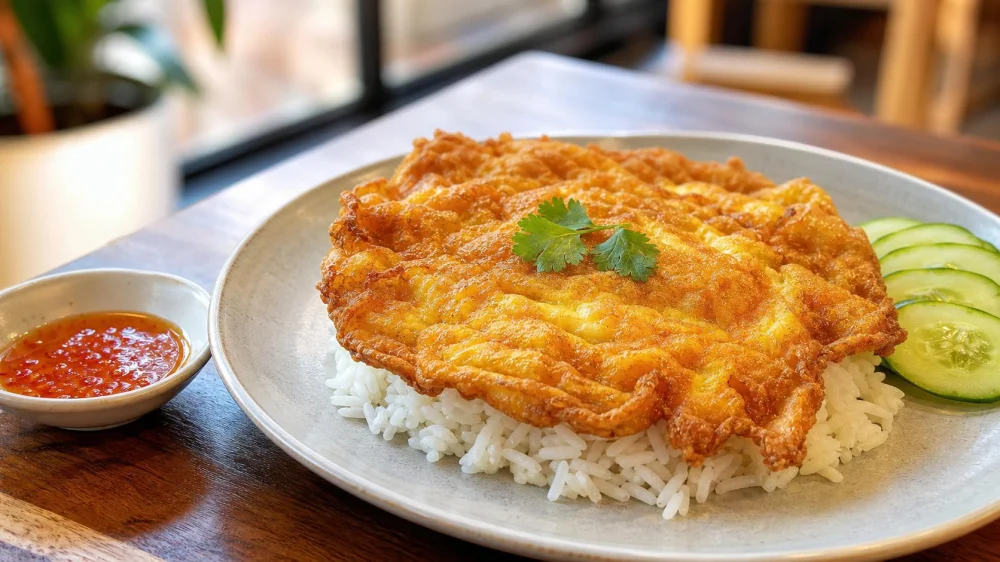
Kai jeow is a Thai-style omelet commonly served over rice. It is usually savory, deeply browned at the edges, and tender inside rather than pale and folded like many Western omelets. Before ordering, ask about the filling, fish sauce or other seasonings, shared frying oil, rice, and dipping sauce. If you need fully cooked eggs, state that clearly.

Thai Chada | Thai & Lao Restaurant
BellinghamNorfolk CountyMassachusetts
52 Pulaski Blvd, Bellingham, MA 02019, USA
What kai jeow is
Kai jeow (also written khai jiao or kai jiao) is beaten egg seasoned and fried in hot oil until puffed, browned, and crisp around parts of the edge. The center can remain soft while still being cooked through. Restaurants may serve it plain, with minced pork, with seafood, or with herbs and vegetables.
The dish is often presented as comfort food: uncomplicated, quick, and satisfying with steamed jasmine rice. It may appear under an egg section, a rice section, or as a side rather than among restaurant specialties. Spelling varies, so a menu search for “Thai omelet” may work better than looking for one Romanized name.

The Riverfront Asian Cuisine & Bar
WilmingtonNew Castle CountyDelaware
936 Justison St, Wilmington, DE 19801, USA
Choose a style and texture
Texture is the most useful preference to communicate. A classic restaurant version may be more browned and oil-fried than a diner-style omelet. Ask whether the kitchen serves it crisp-edged, fluffy, thin, or thick. “Crisp at the edges and cooked through” is a practical request when you want the traditional contrast without a wet center.
A request for “less oil” can change the signature puffed texture and may not be possible during a busy service. If oil level matters more than crispness, ask whether the kitchen can pan-cook a thinner version. Treat that as a request, not an assumption about what every Thai restaurant offers.
Pick fillings carefully
Plain kai jeow lets the egg, seasoning, and browned edges lead. Minced pork adds richness; shrimp or crab adds sweetness and seafood flavor; green onion, cilantro, or other herbs add freshness. A menu description may not name every ingredient, so confirm the actual filling rather than relying on the dish title.
For a first order, plain or one clearly identified filling is easiest to evaluate. A loaded version is best when you want a full meal, but it can make allergy and texture questions harder. If poultry, pork, or seafood is included, ask for the filling and egg to be thoroughly cooked.
Plan rice and sauces
Kai jeow is commonly paired with steamed jasmine rice, which balances its salty, rich character. Confirm whether rice is included or ordered separately. If the portion is large, one omelet plus rice may be shareable, but portion sizes vary by restaurant.
A sweet chile sauce or another house condiment may be served alongside. Taste the omelet first, then add sauce in small amounts. Ask for sauce on the side if you want to control sweetness, heat, sodium, or an unknown ingredient. Do not assume a red sauce is always extremely spicy.
Ask useful dietary questions
“Vegetable” or “plain” does not automatically mean vegetarian. Traditional seasoning may include fish sauce, oyster sauce, or a seasoning blend. Ask, “Can this be made without fish sauce, oyster sauce, meat stock, or meat filling?” If avoiding those ingredients is essential, confirm what seasoning will replace them.
For allergies, name the allergen and ask about both the batter and shared equipment. Egg is fundamental to the dish; shellfish, fish, soy, wheat, or other allergens may appear in seasonings, fillings, sauces, or shared oil. A restaurant cannot guarantee zero cross-contact unless it describes controls that meet your needs. People with severe allergies should follow their clinician’s emergency plan.
Use a simple ordering checklist
- Find “kai jeow,” “khai jiao,” or “Thai omelet” on the menu.
- Ask whether the standard version is plain or includes pork, seafood, or vegetables.
- Describe the texture you want: classic crisp edges, less browned, or fully cooked through.
- Confirm seasonings if you avoid fish sauce, oyster sauce, soy, or wheat.
- Ask whether rice and dipping sauce are included.
- Request sauce on the side when heat or sweetness is uncertain.
- For takeout, open the container promptly at home so trapped steam does not soften the crisp edges.
Frequently asked questions
Is kai jeow spicy?
The omelet itself is often savory rather than chile-hot, but recipes and fillings vary. Heat may come from fresh chiles, chile sauce, or a condiment. Ask separately about the egg mixture and the sauce.
Is it the same as pad kai?
No single English spelling covers every menu term. Kai jeow generally refers to a fried Thai omelet. Other egg dishes may be stir-fried, scrambled with ingredients, or served as part of another recipe. Use the description and ask the server when the name is unclear.
Can I order it for breakfast?
Possibly, but U.S. Thai restaurants set their own hours and menus. Kai jeow can be eaten at different times of day; availability depends on the restaurant rather than a universal breakfast rule.
How do I request a fully cooked egg?
Say, “Please cook the egg and filling all the way through, with no wet center.” USDA guidance for U.S. consumers lists 160°F (71.1°C) for egg dishes, but a diner usually communicates the result while the kitchen manages its process.
Sources and important notes
The Thailand Foundation describes Thai omelet as a familiar comfort food and discusses its culinary context. For U.S. food-safety boundaries, the USDA Food Safety and Inspection Service advises cooking egg dishes thoroughly and provides minimum-temperature guidance. See the Thailand Foundation overview and the USDA safe temperature chart.
Restaurant recipes, spellings, portion sizes, ingredients, and cross-contact controls vary. This guide supports clearer ordering; it does not replace restaurant-specific ingredient information or medical advice.
Next steps
Choose plain or one filling, decide whether crisp edges or reduced oil matters more, and write down any ingredient that must be avoided. At the restaurant, confirm the filling, seasoning, rice, sauce, and doneness in one short conversation. Then taste before adding condiments so the omelet’s texture and flavor stay in balance.


 Niyom Thai Kitchen4.0 (678 reviews)
 Blue Pad Thai 19924.0 (56 reviews)
 Cassette Thai Diner4.0 (71 reviews)
 NeeNee’s Kitchen5.0 (29 reviews)
 Topaz Thai Authentic4.0 (1399 reviews)
 Thai Hot Box4.0 (374 reviews)
 Thai Food Ingredient Guide: Lemongrass — How to Store & Use Fresh vs Dried
 The Best Thai Food Restaurants in Jacksonville for Thai Food Lovers
 Thai Food and Travel Photography: How to Style Your Dish for Instagram
 How to Make Thai Mango Sticky Rice (Khao Niew Mamuang) Step-by-Step
 The Best Thai Food Podcasts & YouTube Channels to Learn From
 How to Make Thai Food That’s Simple, Delicious & Authentic