Tom Yum vs Tom Kha: A Thai Soup Ordering Guide
On this page
- Quick answer
- Read the names in parts
- What to expect from tom yum
- What to expect from tom kha
- Recognize the aromatics
- Choose a protein or vegetable version
- Discuss chile heat clearly
- Ask dietary and allergen questions
- Eat around inedible aromatics
- Pair the soup with a meal
- Takeout and leftovers
- Respect restaurant and regional variations
- Ordering checklist
- Frequently asked questions
- Next steps
Quick answer
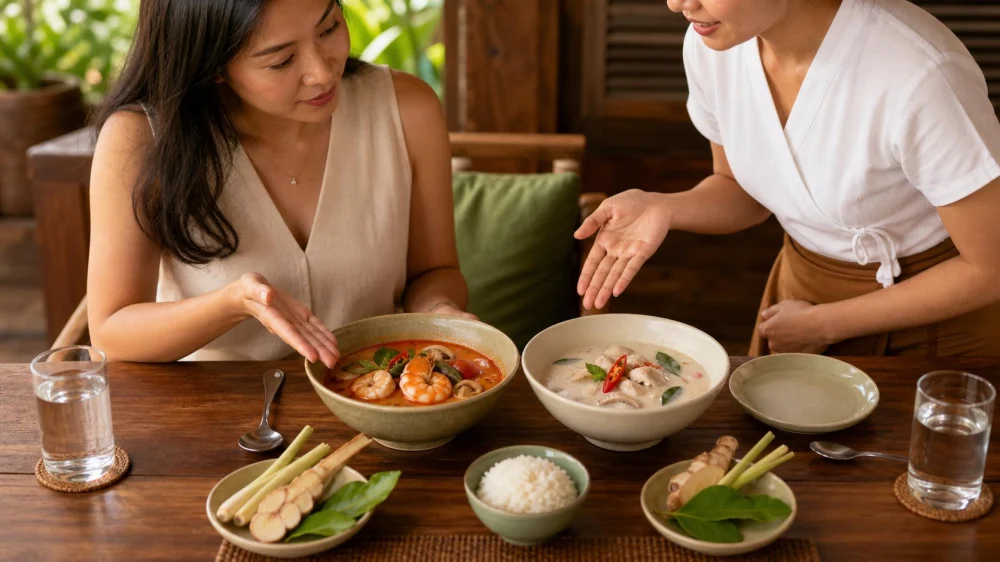
Tom yum is generally a hot-and-sour Thai soup with a clear or sometimes creamy-looking broth flavored by lemongrass, galangal, makrut lime leaves, chile, lime, and savory seasonings. Tom kha uses a related aromatic foundation but adds coconut milk and emphasizes galangal, creating a richer, rounder, less sharply acidic broth.
Choose tom yum for bright sourness, chile, and a lighter aromatic broth. Choose tom kha for coconut richness, gentle sweetness, and a softer balance around the aromatics. Neither is automatically mild, dairy-free, vegetarian, gluten-free, or free of fish and shellfish ingredients. Ask about the restaurant’s broth, seasoning, protein, chile level, and garnish.

Love at First Bite Thai Kitchen and Bar
LexingtonMiddlesex CountyMassachusetts
1710 Massachusetts Ave, Lexington, MA 02420, USA
Read the names in parts
Thai menu names often describe technique and major ingredients. “Tom” refers broadly to boiling or a boiled soup preparation. “Yum” signals a sour-spicy seasoned profile. “Kha” refers to galangal.
The final word may identify the protein: gai for chicken, goong or kung for shrimp, talay for seafood, and other terms depending on transliteration and menu style.
English spellings vary. Tom yam and tom yum can refer to the same soup family; tom kha gai means a galangal-coconut soup with chicken.
Ask staff to describe the actual bowl rather than relying only on spelling. The menu may use a familiar English category for several house versions.
What to expect from tom yum
Tom yum balances sour, salty, spicy, aromatic, and sometimes slightly sweet elements. Lime juice often supplies fresh acidity, while fish sauce or another seasoning contributes savoriness.
A clear tom yum can look light but taste intense. Some versions include a roasted chile paste, evaporated milk, dairy, or coconut component that makes the broth orange or creamy. Color alone does not identify the ingredients.
Mushrooms, tomato, onion, cilantro, sawtooth herb, or other vegetables may appear. Shrimp and seafood versions are common, but chicken, pork, fish, vegetable, and mixed versions also exist.
The soup may arrive in a personal bowl or a shared hot pot. Confirm portion and serving vessel, especially when the center container has a flame or hot chimney.
What to expect from tom kha
Tom kha combines galangal, lemongrass, lime leaf, coconut milk, chile, lime, and savory seasonings. The coconut gives it opacity, body, and a rounded finish.
Tom kha gai with chicken is widely recognized, but restaurants may offer shrimp, seafood, tofu, mushrooms, or vegetables. The seasoning base may still contain fish sauce, shrimp paste, or meat stock.
The soup can be tangy and spicy despite its creamy appearance. Coconut milk softens chile perception for some diners but does not eliminate heat.
A good bowl keeps coconut richness, acidity, salt, and aroma in balance. It should not be judged as a Western cream soup; the texture and flavor logic are different.
Recognize the aromatics
Lemongrass pieces look like pale fibrous stalks. Galangal resembles sliced root but is firmer and more resinous than common ginger. Makrut lime leaves are glossy green leaves, sometimes torn or sliced.
These ingredients perfume the broth and may be left in the bowl even when not intended to be chewed or swallowed. Whole dried chiles can also remain.
Cilantro, scallion, sawtooth herb, basil, and lime may appear as finishing aromatics. Garnishes vary.
Ask the server which pieces are for fragrance. Use the spoon to move fibrous stalks or large leaves to the side of your bowl rather than assuming every item is edible.
Choose a protein or vegetable version
Shrimp brings sweetness and seafood flavor to tom yum. Chicken pairs naturally with the coconut and galangal of tom kha. Mushrooms absorb broth and can give either soup substance.
Seafood may include shell-on shrimp, squid, mussels, fish, or a mixture. Ask how it is served and whether shells remain.
Tofu is not proof of a vegetarian base. Broth, fish sauce, shrimp paste, chile paste, and cross-contact can contain animal ingredients.
If sharing, consider the table’s allergies and preferences before ordering a mixed seafood or meat broth. A separate bowl may be safer than trying to remove an ingredient.
Discuss chile heat clearly
Ask whether the restaurant can adjust chile in the broth or whether a base batch is already prepared. “Medium” is subjective and differs among kitchens and diners.
Describe your tolerance using the restaurant’s scale and examples: no added chile, gentle warmth, clearly spicy, or house level. Removing visible chiles may not remove heat already infused.
Tom yum’s acid and chile can feel sharper than the same numerical spice level in coconut-rich tom kha. Do not assume coconut soup is mild.
Order plain jasmine rice and water alongside a spicy soup. Taste before adding chile flakes, chile oil, lime, fish sauce, or sugar.
Ask dietary and allergen questions
Common concerns include fish, shellfish, soy, wheat, coconut, dairy, peanuts, and shared equipment. Fish sauce and shrimp-based seasoning may not be visible.
Tom kha usually contains coconut, which matters for diners with coconut allergy. It may also contain dairy in some restaurant recipes even though coconut milk provides the traditional creamy character.
Soy sauce, seasoning sauce, chile paste, stock, and prepared condiments can contain wheat or soy. Ask about the complete recipe and cross-contact rather than requesting only “no soy sauce.”
For vegan or vegetarian soup, ask whether broth, fish sauce, shrimp paste, oyster sauce, and garnish are replaced, not merely omitted at the end.
Eat around inedible aromatics
Use the spoon for broth and bite-size ingredients. A fork can help move noodles or solids if the restaurant provides one.
Set lemongrass stalks, galangal slices, lime leaves, and whole chiles neatly at the side of your bowl or on a small plate. Do not spit them onto the table.
For a shared vessel, use the serving ladle rather than your personal spoon. Distribute protein and broth fairly and avoid searching through the pot.
Steam and metal hot pots can burn. Let the server position or extinguish any burner; do not move it without guidance.
Pair the soup with a meal
Tom yum adds sour-spicy contrast to rice, grilled meat, omelet, stir-fried vegetables, and mild noodle dishes. Avoid ordering every dish at maximum heat.
Tom kha pairs well with plain rice, grilled chicken, herb salads, and dishes that benefit from coconut richness. A small shared bowl can act as one flavor in a varied meal.
Balance textures: soup, rice, a crisp vegetable dish, and one grilled or stir-fried plate. This is often more satisfying than several liquid curries and soups together.
Ask staff about house specialties and portion sizes. Thai meals are commonly built around shared contrast rather than one course per person, though restaurant formats vary.
Takeout and leftovers
Ask for rice, herbs, lime, and crisp garnishes separately when possible. Secure the soup upright in a leak-resistant container and transport it promptly.
Refrigerate leftovers according to food-safety guidance. Seafood and coconut broth should not remain in a warm car or at room temperature for extended periods.
Reheat gently until safely hot without repeatedly boiling delicate seafood. Follow restaurant instructions and discard food held unsafely.
Remove large fibrous aromatics before reheating if desired, but keep enough broth and solids for balanced flavor.
Respect restaurant and regional variations
Thai cooks, regions, families, and restaurants make these soups differently. Ingredient availability in the United States also shapes menus.
A clear tom yum and a creamy tom yum are both established styles. One restaurant’s tom kha may be sweeter, tangier, or spicier than another’s.
Ask, “How does your kitchen prepare it?” instead of declaring that one color, garnish, or thickness is the only authentic version.
Pronunciation does not need to be perfect. Pointing to the menu and asking about the protein and broth is respectful and effective.
Ordering checklist
- Choose bright hot-and-sour tom yum or coconut-rich tom kha.
- Confirm clear or creamy tom yum style.
- Select chicken, shrimp, seafood, tofu, mushroom, or vegetables.
- Ask whether the broth contains meat, fish sauce, or shrimp seasoning.
- Discuss chile level using descriptions, not assumptions.
- Share coconut, shellfish, fish, dairy, soy, and wheat allergies.
- Confirm personal or shared portion size.
- Move fibrous aromatics aside rather than chewing them.
- Package takeout securely and keep it cold.
Frequently asked questions
Is tom kha always milder than tom yum?
No. Coconut can soften the perception of heat, but tom kha can contain substantial chile. Ask about the current batch.
Is creamy tom yum the same as tom kha?
No. Creamy tom yum keeps the tom-yum flavor profile and may use chile paste, dairy, or another enriching ingredient. Tom kha centers coconut and galangal.
Can I eat the lemongrass and lime leaves?
Large fibrous pieces are generally used for aroma and moved aside. Finely sliced edible preparations can differ, so ask the restaurant.
Is tom yum gluten-free?
Not automatically. Stocks, sauces, seasoning products, chile pastes, and cross-contact may contain wheat.
Which soup is better with rice?
Both work well. Rice tempers tom yum’s sharp heat and absorbs tom kha’s coconut broth. Choose based on the rest of the meal.
Next steps
Decide between bright sour heat and coconut richness, then choose protein, chile level, and portion. Ask about hidden animal ingredients and allergens. Taste the soup first, move fibrous aromatics aside, and pair it with plain rice and contrasting dishes.
Recipes and customs vary across Thailand and among restaurants. Let the kitchen’s description guide the bowl you are ordering.

 The Chatta Box4.0 (795 reviews)
 Sukhothai4.0 (424 reviews)
 THAI KITCHEN - Thai Restaurant4.0 (334 reviews)
 Blue Mango4.0 (294 reviews)
 Twin Tails4.0 (193 reviews)
 Roi Siam Restaurant4.0 (235 reviews)
 Thai Food Near Me in Tacoma: Curry Spots in the City of Destiny
 Thai Food for Busy Weeknights: Pre-Prep & Cook Smart for Quick and Flavorful Dinners
 Thai Food for Apartment Living: Easy Flavorful Budget Meals
 Thai Food Ingredient Guide: Thai Chili Flakes — How Hot Are They Really?
 The Best Thai Food Recipes for Holiday Entertaining & Leftovers
 Thai Food Ingredient Spotlight: Thai Coconut Cream — How to Choose & Use | Perfect for Thai Recipes