Larb Ordering Guide: Protein, Herbs, Toasted Rice, and Heat
Table of contents
- Quick answer
- What larb is
- Choose a protein and safe preparation
- Understand the flavor balance
- Why toasted rice matters
- Set chile heat clearly
- Check allergens and dietary needs
- Choose useful pairings
- Manage leftovers and takeout
- Ordering checklist
- Limitations
- Frequently asked questions
- Sources and evidence notes
- Conclusion
Quick answer
Order larb by choosing the protein, confirming it will be fully cooked, naming your chile tolerance, and asking how the kitchen uses fish sauce, lime, herbs, and toasted rice powder. Ground chicken, pork, beef, mushrooms, or tofu can produce different textures. Serve it with sticky rice, cabbage, cucumber, and herbs. If allergies or a vegetarian diet matter, verify the dressing, seasoning, and shared preparation—not just the visible protein.

What larb is
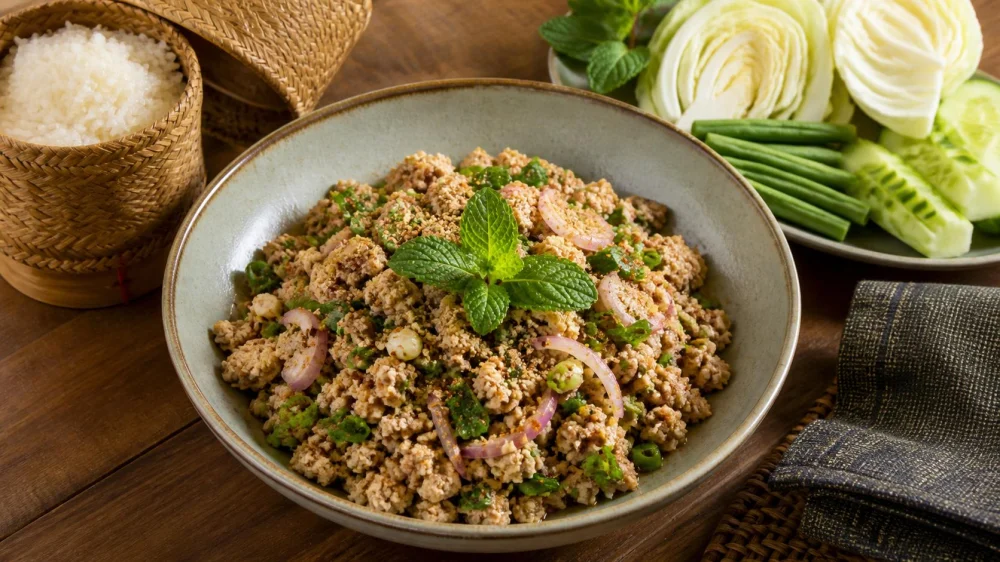
Larb, also spelled laab, lap, or larp, is associated with Laos and Thailand's northeastern Isan region, with many local and family forms. U.S. Thai restaurants commonly serve a warm or room-temperature mixture of chopped or ground cooked protein dressed with lime, fish sauce, chile, shallot, herbs, and toasted rice powder.
Calling it a “meat salad” is convenient but incomplete. Its identity comes from the interaction of savory protein, bright acid, fragrant herbs, chile, and the dry nutty texture of roasted rice. Recipes can differ substantially, so the menu description and server's explanation matter more than any universal ingredient list.
Choose a protein and safe preparation
Chicken larb tends to be light and receptive to herbs; pork can be richer; beef may taste deeper; duck can be more robust. Mushroom, tofu, or plant-based versions may be available, though they are not automatically vegetarian if the dressing contains fish sauce or the pan is shared.
Some traditional or specialty preparations may use raw or undercooked meat or blood. Raw and undercooked ground meats carry foodborne-illness risk. For U.S. food-safety guidance, ask for fully cooked larb: USDA recommends ground beef, pork, veal, and lamb reach 160°F, and ground poultry reach 165°F, measured with a food thermometer. Color and texture alone cannot verify safety.
People who are pregnant, older, immunocompromised, or serving young children should be especially cautious about raw or undercooked animal foods. A restaurant diner usually cannot measure the finished dish, so choose a reputable kitchen and explicitly request a fully cooked preparation.
Understand the flavor balance
Lime supplies acidity, fish sauce provides salt and savory depth, shallot adds bite, herbs bring freshness, and chiles add heat. Some versions are more sour, salty, or bitter than others. Ask how the house prepares it before requesting many changes; removing one element can shift the entire balance.
Common herbs may include mint, cilantro, scallion, or culantro, but the mix varies. If you dislike one herb, name it specifically. “No garnish” may not remove herbs folded through the dish. If sodium is a concern, ask whether the kitchen can reduce fish sauce, recognizing that other prepared sauces can still contribute sodium.
Why toasted rice matters
Khao khua—dry-toasted rice ground into a coarse powder—adds aroma, light crunch, and body. It absorbs dressing and helps flavors cling to the protein. Too little can make the dish feel loose; more creates a drier, grainier finish. It is not the same as a side of sticky rice.
Rice itself is not wheat, but packaged seasonings or shared equipment can complicate a gluten-free request. Ask the restaurant to check every sauce and seasoning rather than assuming the dish is gluten-free from the name alone. Cross-contact practices vary.
Set chile heat clearly
“Medium” is not standardized. Tell the server how you usually order at that restaurant or ask for a chile count. Because ground chile is dispersed throughout the mixture, it cannot simply be picked out later. Start lower when uncertain, especially in a shared meal.
Sticky rice and crisp vegetables can give the palate a break, but they do not remove capsaicin from the dish. A separate chile condiment lets diners add heat individually. Do not assume “authentic” requires extreme spiciness; balance and aroma matter as much as heat.
Check allergens and dietary needs
Fish sauce is a likely fish allergen and makes a dish non-vegetarian. Some kitchens may use soy-containing seasoning, shellfish ingredients, wheat-containing sauces, or prepared powders. Peanut is not a defining larb ingredient in every recipe, but shared kitchens and garnishes can create exposure.
State a food allergy plainly, then ask whether staff can verify the protein, dressing, seasoning, garnish, pan, utensils, and prep area. Cross-contact is different from an intentional ingredient. If the restaurant cannot meet your safety needs, select another dish or restaurant. For vegan larb, confirm both the protein and every savory seasoning.
Choose useful pairings
Sticky rice is a classic companion and helps turn larb into a meal. Raw cabbage, cucumber, green beans, and fresh herbs supply cool crunch. A mild soup or grilled vegetable dish can balance a tart, spicy larb. For family-style dining, add dishes with different cooking methods instead of ordering several similarly intense salads.
Use serving utensils and place an allergy-sensitive portion on a separate plate before others begin sharing, if the kitchen can provide a suitable version. Ask whether rice and vegetables are included or ordered separately so the table is not left without a neutral accompaniment.
Manage leftovers and takeout
Larb can become drier as toasted rice absorbs dressing, while herbs wilt and release aroma. Eat it reasonably soon for best texture. Keep perishable food out of the temperature danger zone: refrigerate promptly, especially during warm weather, and follow local food-safety guidance.
Store vegetables and sticky rice separately when possible. Reheat cooked meat leftovers to 165°F, but understand that reheating herbs and lime may change flavor. Do not taste leftovers to determine safety, and discard food that was left unrefrigerated too long.
Ordering checklist
- Choose chicken, pork, beef, duck, mushroom, tofu, or another available base.
- Request fully cooked meat or poultry.
- Ask how sour, salty, herbal, and dry the house style is.
- Set a concrete chile level.
- Confirm fish sauce, soy, shellfish, wheat, peanuts, and shared preparation if relevant.
- Order sticky rice and cooling vegetables.
- Refrigerate takeout promptly and reheat cooked leftovers safely.
Limitations
Larb traditions, spellings, ingredients, and service styles vary across Laos, Thailand, and diaspora restaurants. This guide does not define one version as uniquely authentic and cannot certify allergen safety or cooking temperature in a restaurant. Ask the current kitchen about its recipe and follow individualized medical or dietary advice.
Frequently asked questions
Is larb served hot or cold?
It may be served warm or at room temperature. Ask the restaurant, because protein and house style affect service.
Is larb always spicy?
Chile is common, but many kitchens can reduce it. Request the heat level before the dish is mixed.
Is larb gluten-free?
Not automatically. Rice powder is rice, but sauces, seasonings, and cross-contact require verification.
Can larb be vegetarian?
Yes, some kitchens offer mushroom, tofu, or plant-based versions. Confirm that fish sauce, meat stock, and other animal ingredients are also replaced.
Sources and evidence notes
Food-safety guidance follows the U.S. Department of Agriculture Food Safety and Inspection Service safe minimum temperature chart and its food thermometer guidance. These support 160°F for ground red meats, 165°F for ground poultry, prompt chilling, and not relying on color. Regional recipes remain variable. Accessed August 10, 2026.
Conclusion
A useful larb order specifies protein, full cooking, heat, herbs, and dietary constraints. Keep the toasted rice and lime-driven balance in view, add sticky rice and crisp vegetables, and verify sauces rather than guessing. That clarity respects both the dish's complexity and the diner's needs.

 Swaddee House of Thai Food4.0 (209 reviews)
 Thai Gourmet4.0 (199 reviews)
 Boran4.0 (483 reviews)
 Noa by September in Bangkok4.0 (433 reviews)
 Smile cafe Thai Restaurant4.0 (152 reviews)
 Rainbow Thai4.0 (234 reviews)
 Thai Food for Solo Cooks: Quick, Flavor-Packed Meals for One
 Tom Yum vs Tom Kha: A Thai Soup Ordering Guide
 How to Make Thai Food That’s Perfect for a Sunday Brunch
 How to Ask if a Thai Dish Is Truly Vegetarian
 Thai Food for Food Bloggers: How to Create Great Content Around Thai Recipes
 The Best Thai Food Podcasts & YouTube Channels to Learn From