Pad See Ew vs Pad Kee Mao: Noodles, Heat, and Herbs
On this page
Quick answer
Choose pad see ew for broad rice noodles with a savory-sweet soy profile, egg, and Chinese broccoli. Choose pad kee mao, often called drunken noodles, for a more aromatic, chile-forward stir-fry with basil and mixed vegetables. Both vary by restaurant, so ask about noodle width, cooked-in heat, protein, sauce ingredients, and whether the kitchen can adjust sweetness or chile.
This guide compares common Thai restaurant versions in the United States. Names and recipes differ by region, cook, and available ingredients.
Define the two dishes
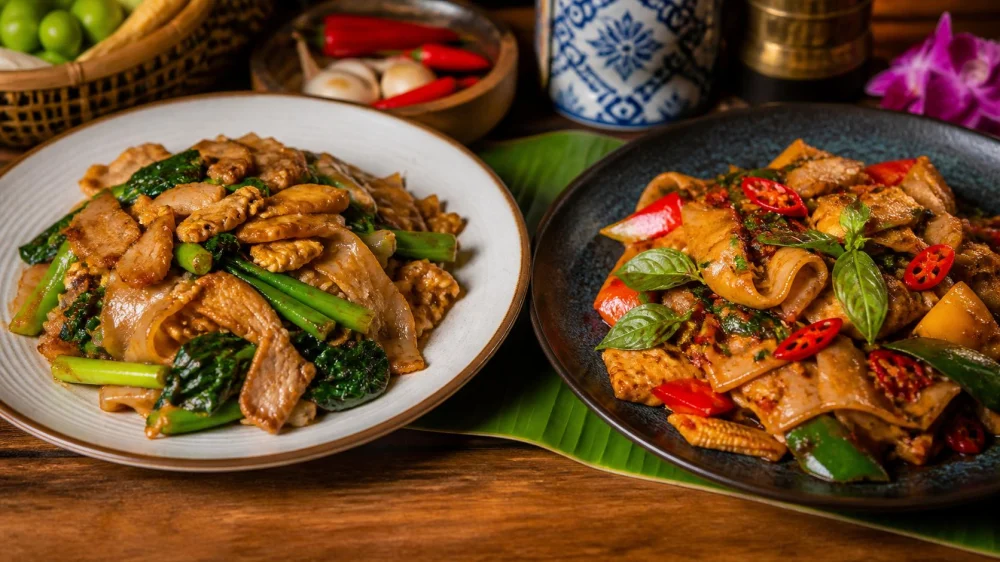
Pad see ew means stir-fried soy sauce and commonly centers wide rice noodles, egg, Chinese broccoli or another green, protein, and dark and light soy-style seasonings. The dish is usually savory with noticeable sweetness and browned wok notes.
Pad kee mao is a stir-fried noodle dish commonly built around chile, garlic, basil, vegetables, sauce, and protein. “Drunken noodles” is the familiar English menu name, but alcohol is not necessarily an ingredient. Ask if that matters.
Both are distinct from pad Thai, which typically uses a tangy-sweet sauce and peanuts or other crunchy garnishes. Do not expect the same noodle or condiment profile.
Compare flavor and heat
Pad see ew is best for diners who want a rounder soy-based taste and less chile emphasis. Dark sauce can color the noodles deeply without making the dish extremely salty, though seasoning intensity varies.
Pad kee mao is best for diners who want fresh chile aroma, garlic, basil, and a more assertive savory profile. Heat may be cooked into the sauce, so removing visible chile at the table will not remove all spice.
Ask the restaurant to describe its standard heat scale. “Medium” is not universal, and fresh chile type and quantity change. If you are sensitive to heat, request the lowest available level and keep extra chile on the side.
Noodles and wok texture
Fresh wide rice noodles are soft, elastic, and prone to sticking together. Good wok handling separates many sheets while leaving some folded edges and browned spots. Packaged or narrower noodles create a different chew but can still be the restaurant's intended style.
A very hot wok encourages seared aroma, but the finished noodles should not taste uniformly burned. Sauce should cling rather than leave the plate entirely dry or flooded. Eat promptly: steam and sauce continue softening rice noodles.
If you prefer distinct chewy pieces, ask whether wide noodles are available and request sauces packed separately only when the kitchen says that works. Reheating can break or harden rice noodles depending on method.
Protein and vegetables
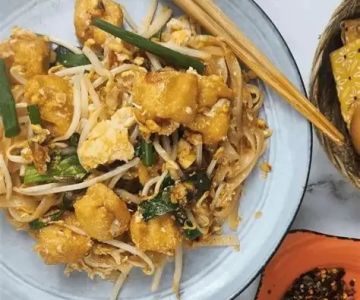
Common proteins include chicken, pork, beef, shrimp, tofu, and mixed options. Egg is often included even in a tofu version. Pad see ew commonly uses Chinese broccoli, with thick stems and leafy tops. Pad kee mao may include peppers, onion, tomato, baby corn, green beans, or other vegetables.
Choose tofu only after confirming broth, sauce, fish sauce, oyster-style sauce, egg, and shared wok practices if you need a vegetarian or vegan dish. “Vegetable” describes visible components, not every seasoning.
For a balanced shared meal, pair one noodle plate with a vegetable or grilled dish rather than ordering multiple sauced starches. One plate may be an individual entrée or a shareable course depending on portion.
Ordering checklist
- Choose pad see ew for savory-sweet soy or pad kee mao for chile and basil.
- Ask which rice noodle width the restaurant uses.
- Select protein and confirm whether egg is included.
- State the desired chile level and ask whether heat is cooked into the sauce.
- Ask about basil and vegetables if those define your choice.
- Clarify sweetness or sauce adjustments before cooking.
- State allergies and dietary restrictions precisely.
- For takeout, open or vent packaging only as safely recommended to limit trapped steam.
Allergens and takeout
Both dishes may contain soy, wheat, egg, fish, shellfish, sesame, or other allergens through sauces and shared equipment. Rice noodles are not proof that the full dish is gluten-free. Oyster-style sauce can contain shellfish unless the restaurant uses a different formula.
Ask whether peanuts or crushed chile share utensils at the condiment station. If cross-contact matters, discuss the complete process and recognize the limits of a busy shared wok kitchen.
For takeout, request prompt packing and minimize travel time. Separate condensation softens noodles, so avoid leaving the closed container in a hot car. Refrigerate leftovers promptly and follow current safe reheating guidance.
FAQ
Are drunken noodles made with alcohol?
Not necessarily. The English name does not define the ingredient list. Ask the restaurant if alcohol is a concern.
Which dish is sweeter?
Pad see ew is commonly sweeter, while pad kee mao often emphasizes chile, garlic, and basil. Individual recipes vary.
Are both dishes spicy?
Pad kee mao is typically the hotter choice. Pad see ew may be mild unless chile is added, but confirm the kitchen's standard.
Can both be made vegan?
Only when the restaurant can omit egg and use sauces, protein, and preparation without animal ingredients according to your requirements.
Why are my noodles stuck together?
Wide rice noodles naturally cling, especially as they cool. Some folds are expected; a fresh hot dish generally separates better than delayed takeout.
Next steps
Decide between soy-sweet and chile-basil, choose a heat level and protein, and confirm egg and sauce ingredients. Eat the noodles promptly, then adjust with table condiments only after tasting the kitchen's seasoning.
Evidence note: This comparison reflects widely used Thai restaurant definitions. The menu and staff determine the exact recipe, ingredients, and heat.

 Thai Origin Halal4.0 (238 reviews)
 Pho Thai Express4.0 (196 reviews)
 Thai Thai II4.0 (381 reviews)
 Bangkok at Bert's4.0 (6 reviews)
 Siam Deluxe4.0 (135 reviews)
 Yezo Thai Isankaya4.0 (569 reviews)
 The Best Thai Food Recipes for Date Night and Leftover Lunch
 The Best Thai Food Recipes for Leftover Rice Revival
 How to Make Thai Food That’s Perfect for a Cozy Evening In
 Thai Food Ingredient Spotlight: Thai Coconut Cream — How to Choose & Use | Perfect for Thai Recipes
 How to Make Thai Food That’s Balanced for a Healthy Lifestyle
 How to Make Thai Street Food Classics at Home (Som Tum, Moo Ping)